


- Main
- Information
- Articles
Introduction to STEFAB AX 60
01.08.2024
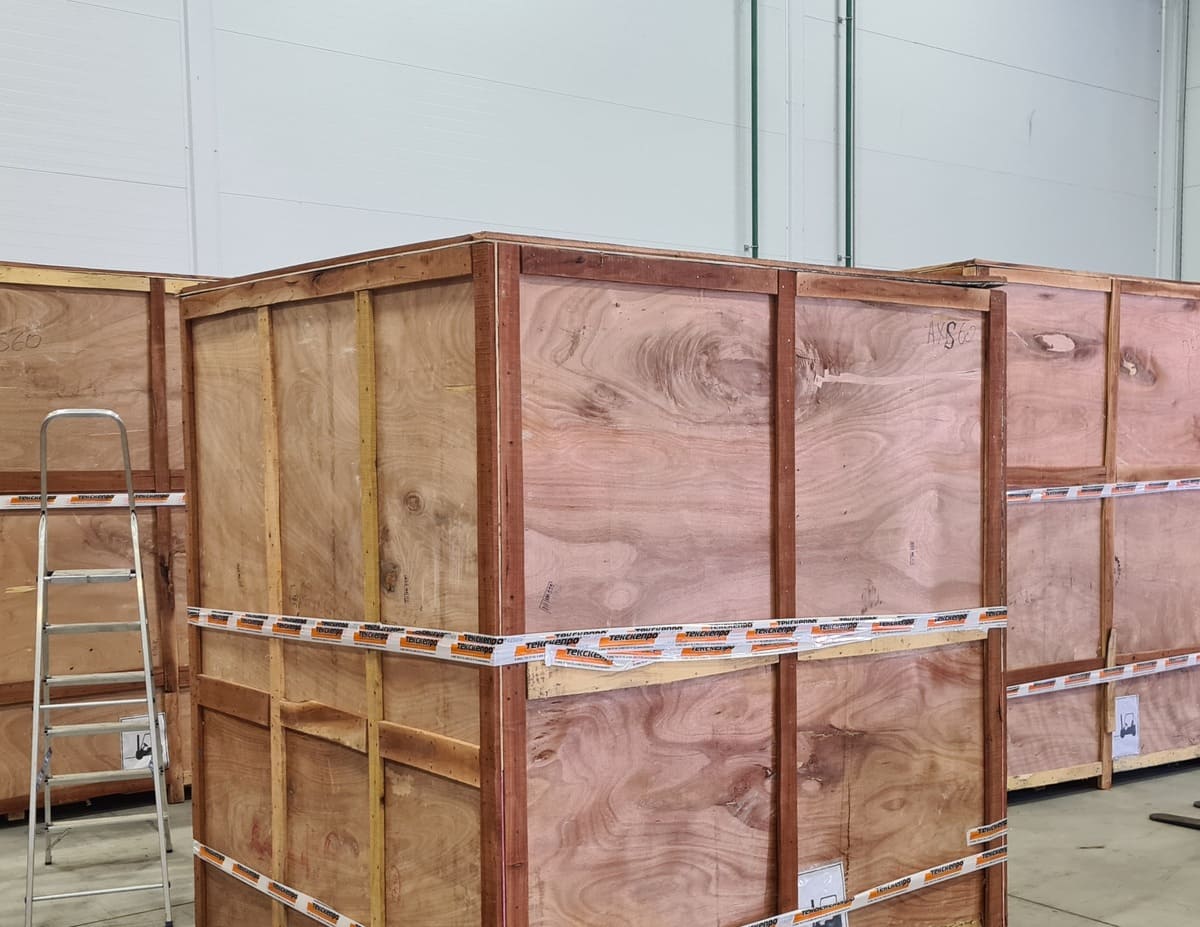
Packaging
The equipment itself is securely packed. Is it a joke to drive from the center of India and sail by sea past the Houthis armed with missiles… But seriously, all the cars are covered with foam packaging material, wrapped in foil, securely fixed on transport pallets and upholstered with blind plywood shields.
A nice bonus is that the washing machines on top in the center have one metal bracket sticking out of the drawer for convenient rigging with a faucet. This can greatly help when installing equipment in hard-to-reach places. I would like to add that for the same purpose, Stefab dryers have top fasteners for four M12 eye bolts.
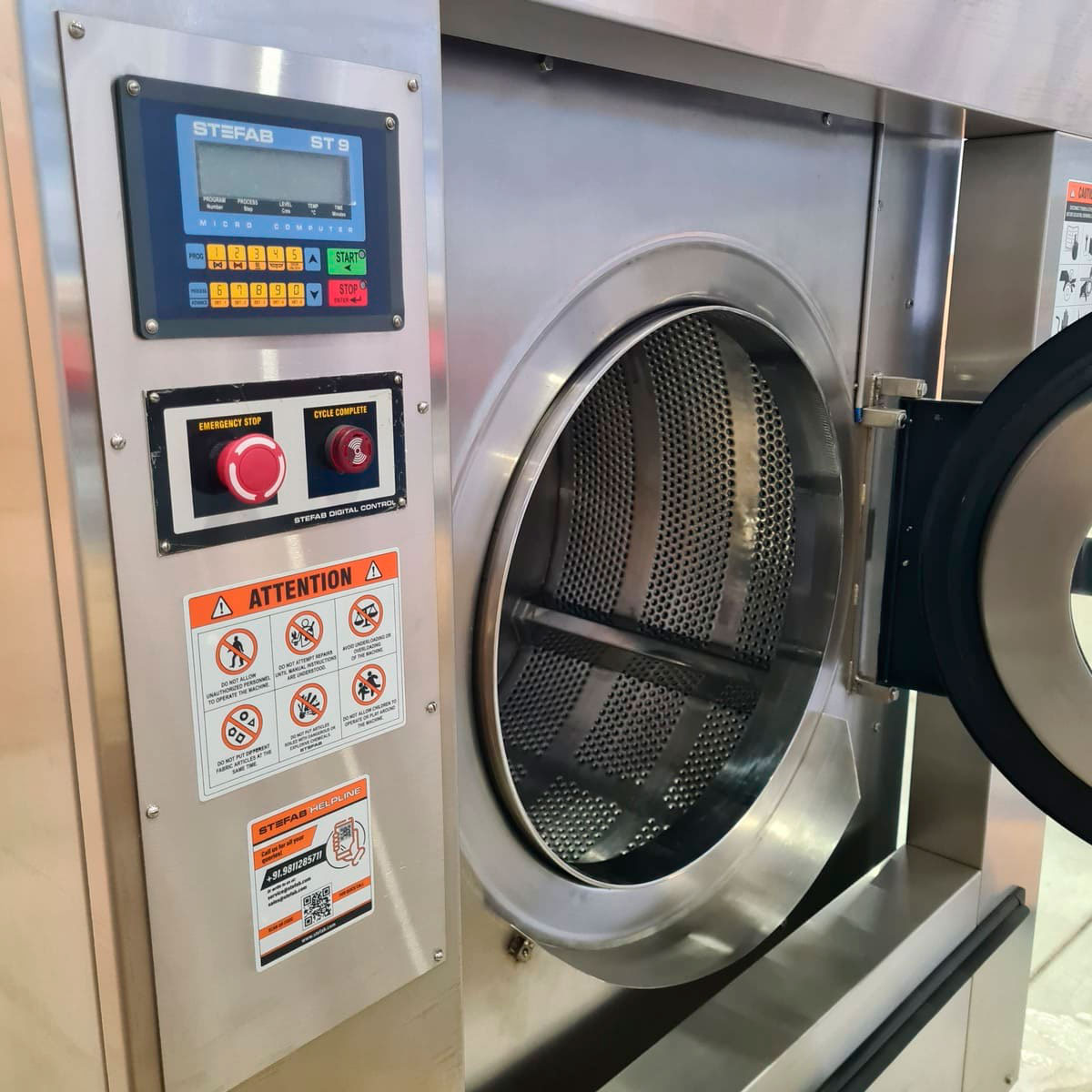
Appearance
After unpacking, the washing machines immediately captivated with their solid appearance. It is worth paying special attention to this. The dimensions and weight of the equipment always clearly indicate the mechanical reliability and durability of the structure.
Compare it yourself. The 60 kg Stefab machine has a width of 1.6 meters, a depth of 1.7 meters and a height of just over 2 meters with a weight of 2.380 kg! Who else can boast of such monumentality?
All exterior panels are made of thick AISI 304 stainless steel (widely used in the food industry). Controls (processor, emergency stop button, buzzer) they are located on the left. The exterior is completed with neat information signs. On the left side panel there is a five-section detergent dispenser, which I will not dwell on (in the age of automatic dosing of drugs). So, what's inside?
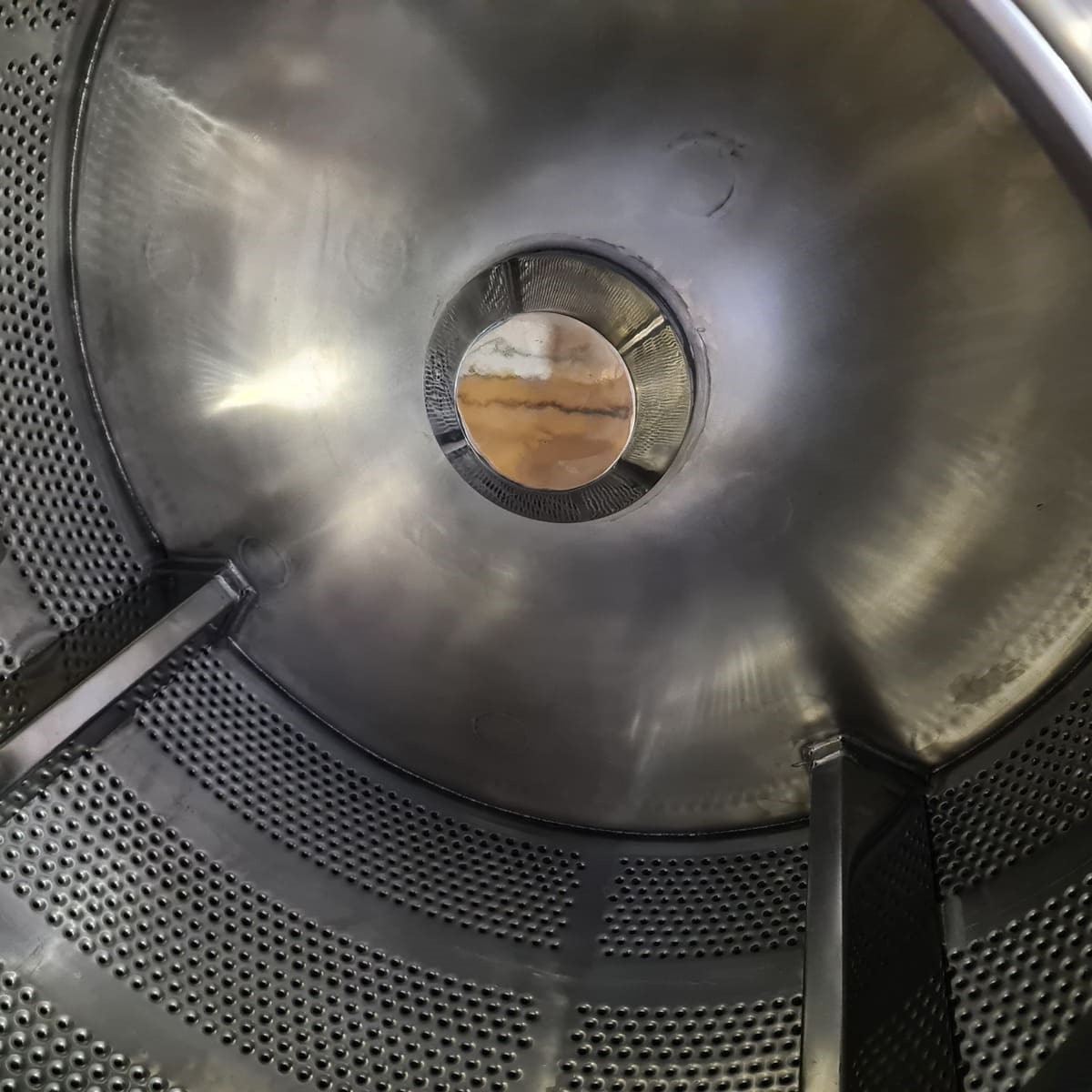
Open the hatch
After fiddling with the unusual lock, we look inside the drum through a large hatch with a diameter of 650 mm. The drum is like a drum. But the big one (diameter 1,100 mm, depth 650 mm) is an honest 617 liters. Stainless steel. The metal is thick. The perforation is neat, with indentations. Wings are also metal.
It does not interfere with anything, it does not cling either when washing clothes or when loading and unloading them. There is a neat metal tray skirt under the loading hole, which prevents the underwear from falling into the gap between the tank and the machine body.
The manhole seal gasket is special. This is not some expensive original part, but a simple and cheap tape made of soft rubber, carefully glued into the grooves of the hatch. Thoughts about the low cost of ownership of Stefab equipment are being strengthened.
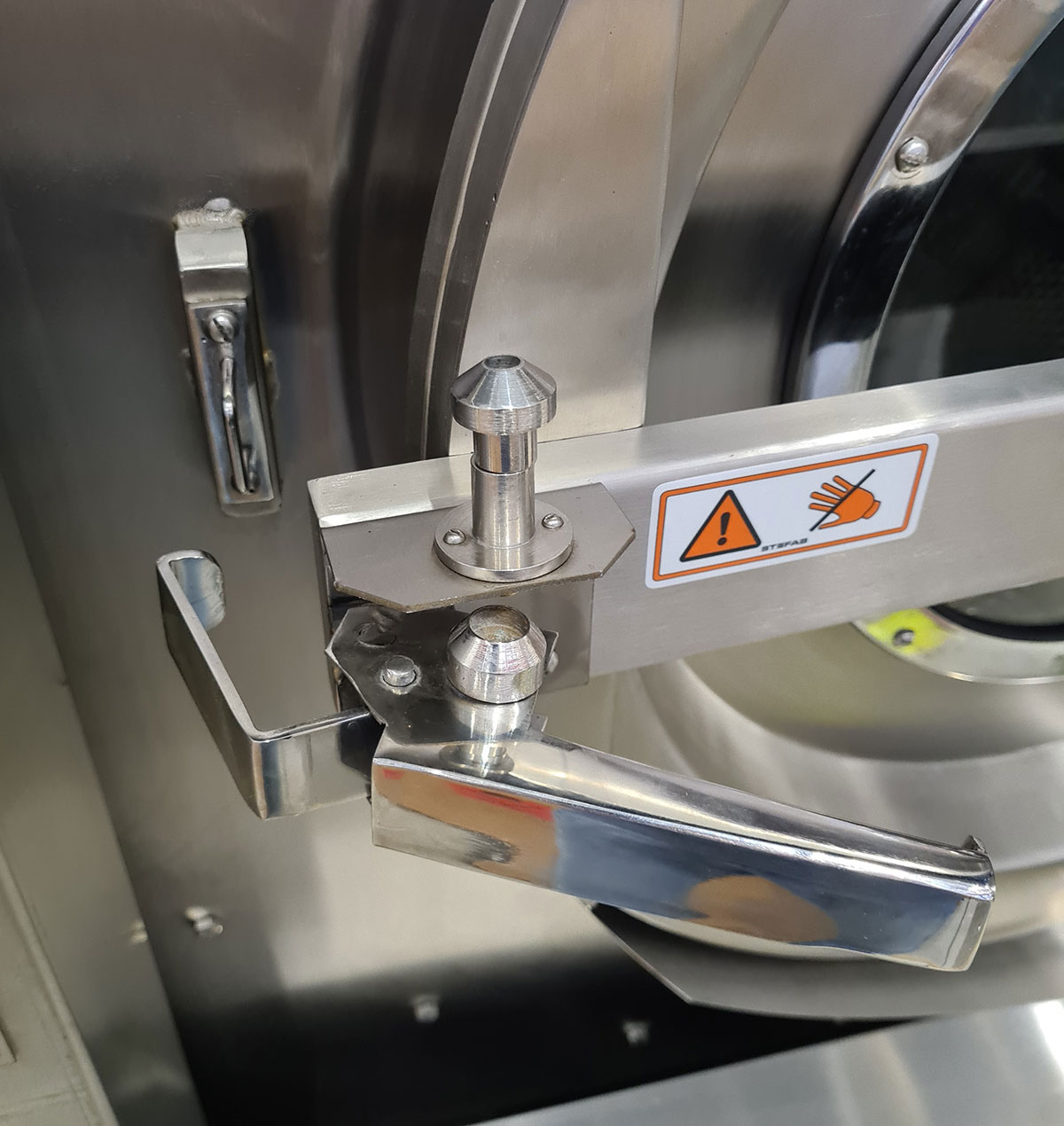
Loading hatch lock
But it's still worth dwelling on the lock in more detail.…
It is unusual and, apparently, demonstrates the deep philosophical approach of Indian designers. Why make something complicated if the simple one works? The lock is unique in that it is absolutely concise and has no electromechanical actuators or adjustments — a hook, a bracket, a handle and a spring-loaded cotter pin for automatic locking! Congratulations to the owners of Stefab equipment — you will never have to buy or repair a car lock.
After practicing a dozen times, I famously learned how to handle the hatch and its lock. I was able to fully appreciate its features and advantages. First, the lock opens with two hands — remember the two buttons for lowering the head of the laundry press? Security! Secondly, even if we assume that Someone decides to open the loading hatch while the machine is running (by unlocking the cotter pin with one hand and pulling the lock handle with the other), then the hatch will only open a small crack and nothing terrible will happen. And even if this Person is criminally negligent and releases the lock hook from the loop with a second movement of both hands, the limit switch hidden under the hatch will trigger and the machine's processor will instantly turn everything off.
And what's hidden behind the hatch on the right?
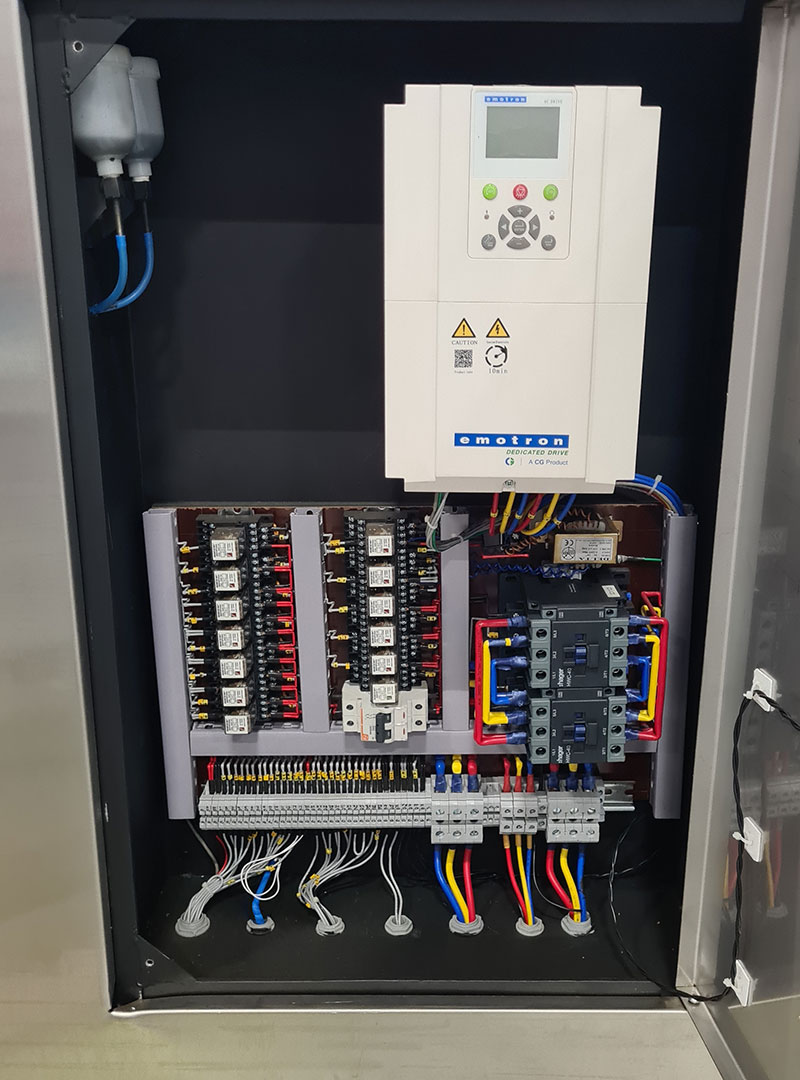
The electric cabinet of the washing machine is hidden behind it. A forced cooling fan is carefully provided on the door. Inside we see an Emotron inverter from the Swedish company CG Drives & Automation and a full set of relays and high-current starters (an electric heating machine). Everything is mounted neatly, the conclusions are signed.
Separately, on the upper left, there are two passive lubrication oilers for the drum suspension bearing unit — each bearing has its own oiler. Again, everything is simple, inexpensive and reliable.
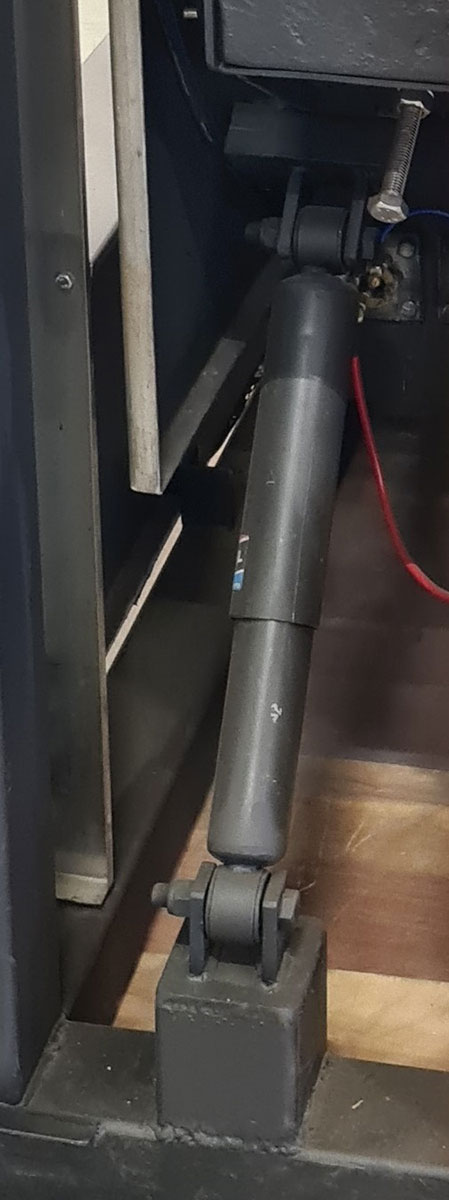
Removing the adjacent side panel, we see one of the four powerful Gabriel hydraulic drum suspension shock absorbers, which are used in the manufacture of large SUVs and light trucks. In the lower part of the washing machine tank, three heating elements are mounted in their own niche. In the same niche, but on the left, a distributed steam injector is mounted for versions with steam (or with steam-electric) heating. Thoughtful design!
Drum drive
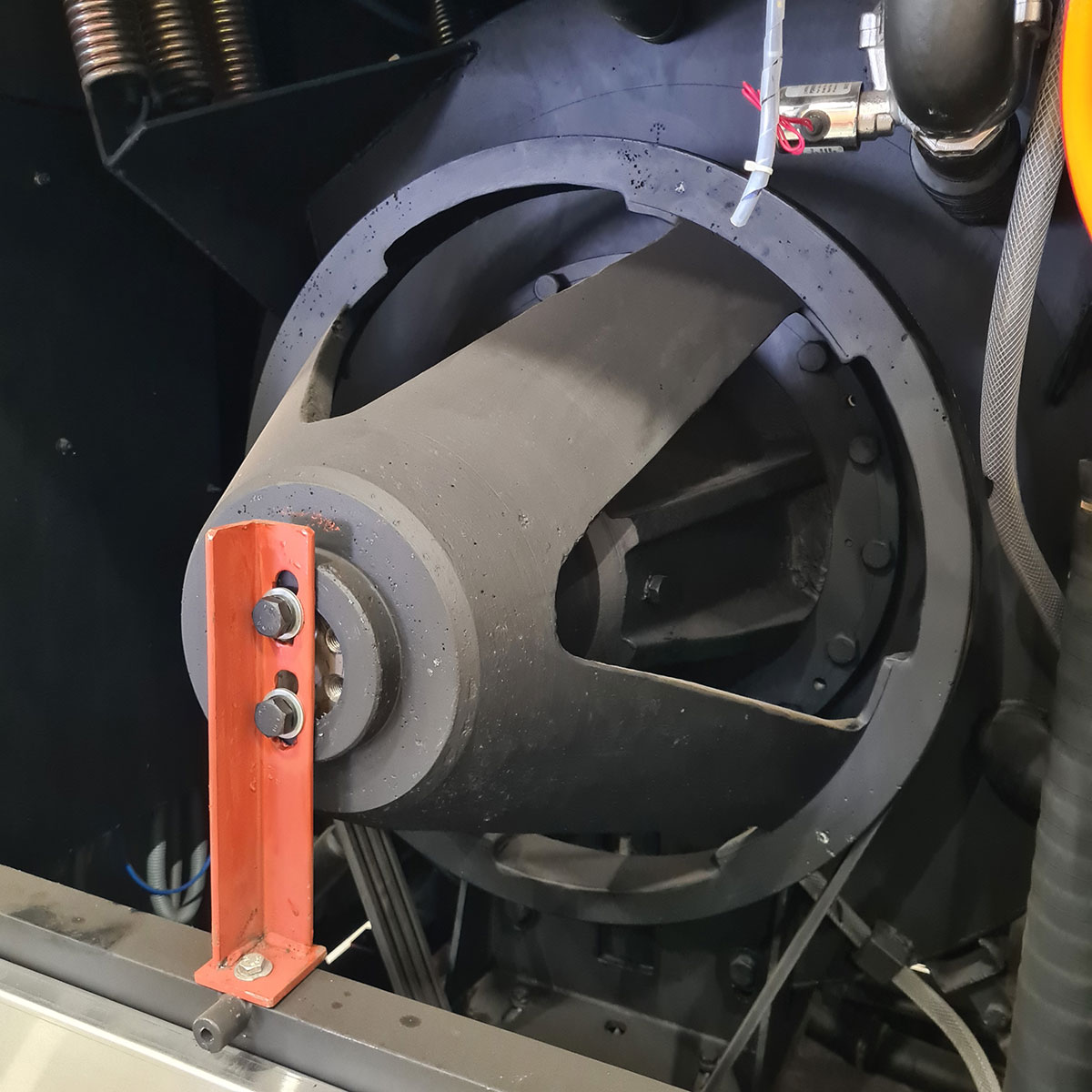
But the most interesting thing opens from the back: a powerful cast-iron solid-cast housing that hides wide roller and ball bearings. The assembly is filled with grease. Self-lubricating seals ensure its health (water resistance and tightness). Do you remember the two oil cans?
One way or another, but in the future, water and chemicals will do their job and the seals will flow. For Stephanie, this does not mean the death of bearings. They are separated from the oil seals by an air gap, and water will simply flow out through the drain tube without harming the bearings. We just need to remember to monitor this, as well as the oil level in the oil cans.
Obviously, Indian specialists have thought out the design of the drum suspension assembly in AX machines well. As the cherry on the cake, I will add that its main shaft has a conical fit and is therefore relatively easy to dismantle. Maintainability!
What else is interesting?
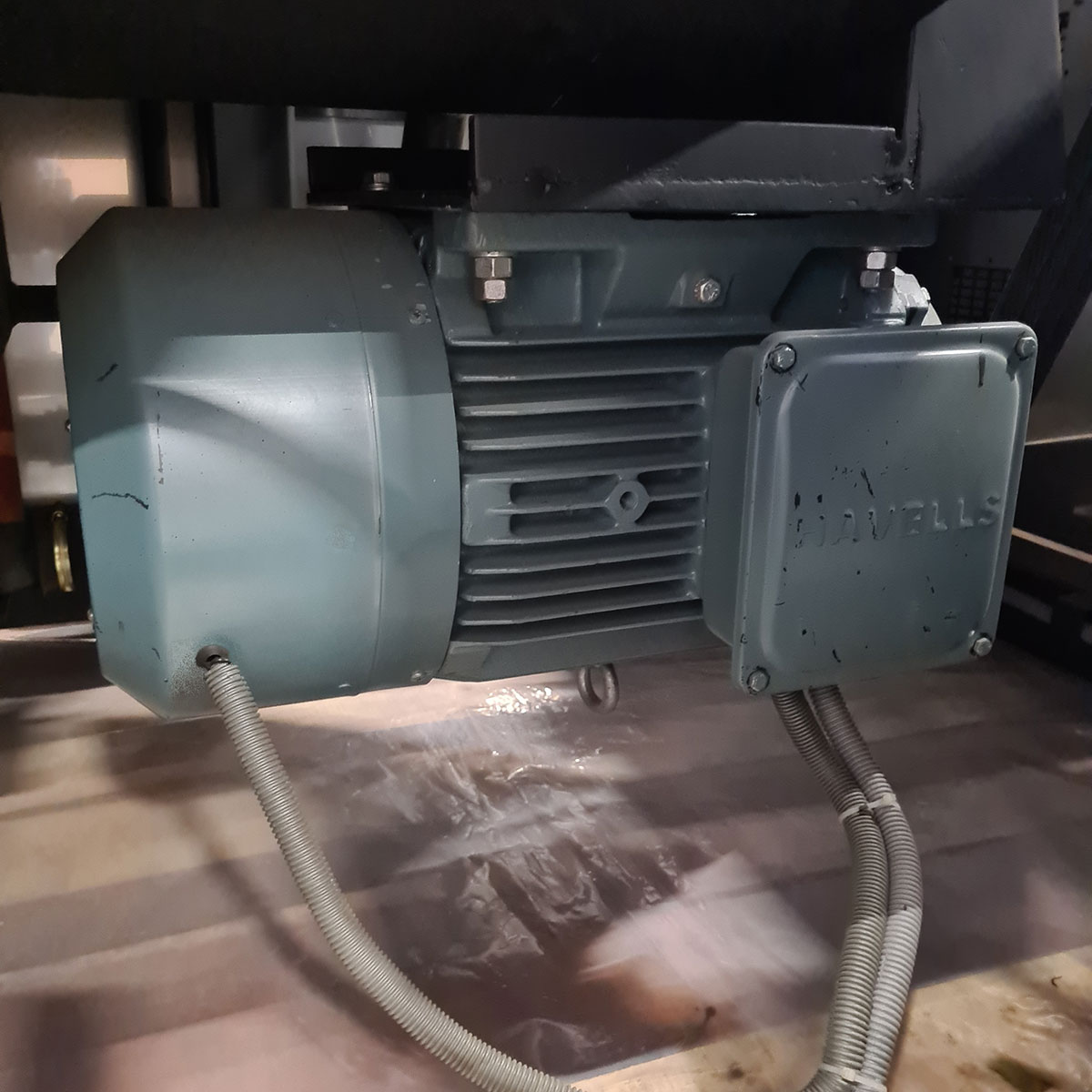
From below we see a large 7.5 kW electric motor from the Indian manufacturer Havells. By means of four belts, the rotation is transmitted to an equally monumental pulley and drum of the machine.
It is surprising that such a solid drive design is limited by the developers to a drum rotation speed of 760 rpm (G-factor = 355). Apparently, this is quite enough for drying clothes in the warm climate of South Asia.…
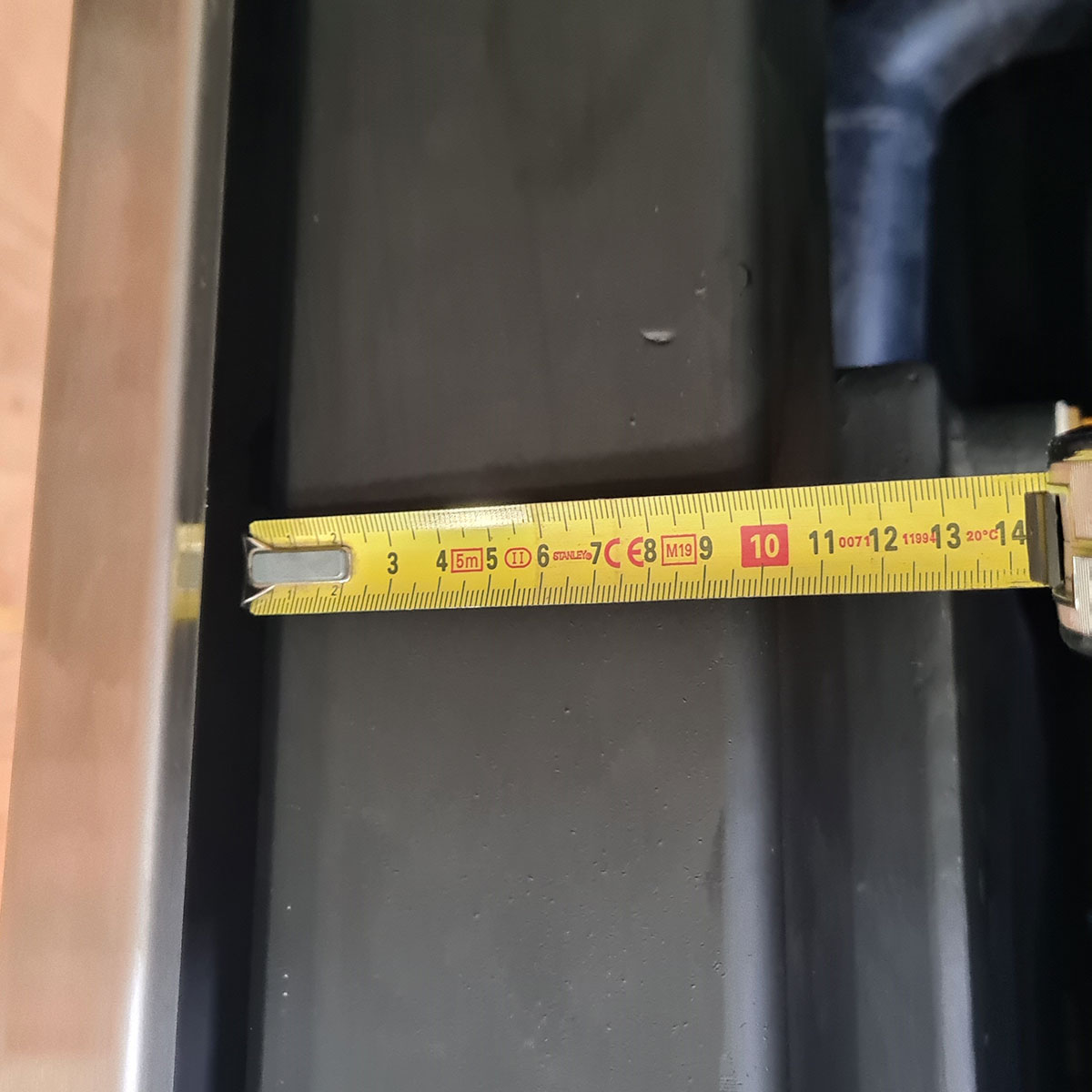
After admiring the aesthetics of the mighty drive, you begin to survey the picture of technical excellence as a whole. The fact is that the entire structure of the washing machine — both fixed and movable parts — is fixed on a powerful welded spatial frame made of square pipes with a cross section of 100 × 100 mm. That is why the entire machine weighing more than two tons can be safely moved by crane for a single suspension point on the roof!
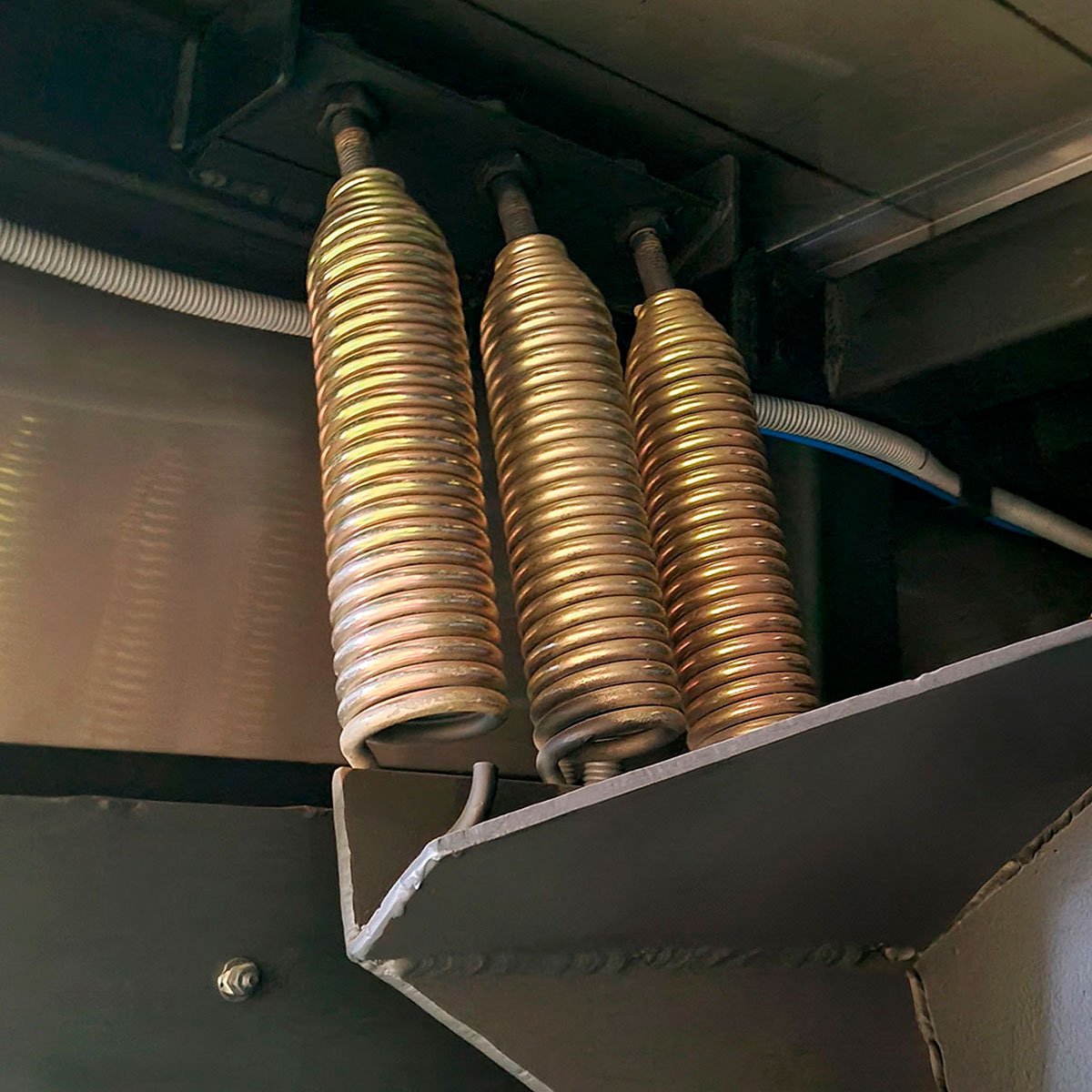
The movable part of the machine (a tank with an internal drum, a front panel with a hatch, heating elements and an electric motor) is suspended from the frame on 12 (!) springs: three at each suspension point! A lot... good… It warms the soul... plus four large hydraulic shock absorbers.
After all of the above, I somehow don't even want to describe one-and—a-half-inch water valves, of which there can be four - for cold, hot, soft water and reuse water, or combinations of motorized drain valves (main, for reuse of water and for heat recovery), or so on.…
|
|
|
|
To summarize in a nutshell, Indian Stefab AX series washing machines are tanks. Of course, there is always something to find fault with. But for that kind of money and from a guaranteed friendly country, yes, with TEXKEPRO's service and technological support.… There is something to think about! |
||
Dmitry KOLOTKOV
TEXKEPRO Company
bodys.: +7 (985) 992-79-76, www.texcare.ru
Documents
