


- Main
- About the company
- News
- Company News
LANADOL is even more than (W)!
03/09/2014
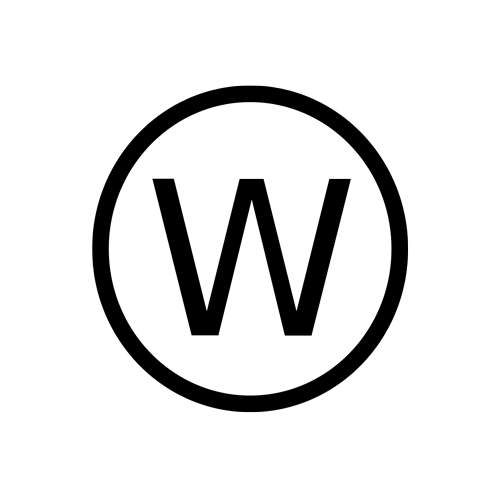
In order to ensure the legal protection of manufacturers, sellers and dry-cleaning enterprises of textiles, Dr. Krussmann (WFK Institute for Applied Research, Krefeld, Germany) organized a working group in 1994 with the aim of including aquachistka in the international product labeling system. In 1995, this working group became part of the European Aquaculture Committee (EWCC), which developed criteria for testing for compliance with the "W" care symbol under the leadership of the Dutch TNO Institute in collaboration with textile research institutes CTTN (France), FCRA (Great Britain), IFP (Sweden), Hohensteiner Institutes (Germany) and the WFK Laundry Research Institute in Krefeld (Germany) with the support of experts in the field of dry cleaning and mechanical engineering.
""On this basis, in 1998, with the support of the EU, the Aquacarb project was developed with the aim of introducing CEN standards defining the test conditions for compliance with the care symbol "W" and its difference from existing international symbols for the care of textile materials.
Since the manufacture and trade of textiles cover the whole world, testing methods were needed that could be applied worldwide and that would give reproducible results and could be implemented in manufacturing plants. When developing international standards for the "W" care symbol, limit values were set that could be achieved by water cleaning and required less mechanical impact compared to washing at home and using simple neutral and publicly available non-ionic surfactants. Although such requirements are much less stringent than those imposed by Kreussler and Miele, this is still an important step in the right direction. The adoption of the "W" care symbol has established mandatory international test criteria to ensure safe cleaning and drying.
""After the introduction of the international textile care symbol "W", it became possible to provide a reliable water treatment method for all textile materials in accordance with the recommendations of the labels for the care of fabrics bearing the symbol "W". However, not all fiber protection features offered by the initial "Miele System Kreussler" aquachist method were taken into account. The following image illustrates the practical implications of this.
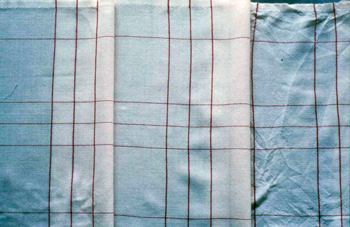
The picture shows three fabrics tested by IWS.
On the left: After dry cleaning in a hydrocarbon solvent
In the center: After an aquachist using LANADOL Sensitive
On the right: After aquachist according to the care symbol "W"
There are no obvious differences between dry-cleaned fabric and fabric cleaned using LANADOL, whereas fabric treated according to the "W" symbol has an increased crease.
In other words,
The LANADOL aquachist exceeds the specifications for the "W" care symbol, thereby making the aquachist process more reliable and safer!
""On this basis, in 1998, with the support of the EU, the Aquacarb project was developed with the aim of introducing CEN standards defining the test conditions for compliance with the care symbol "W" and its difference from existing international symbols for the care of textile materials.
Since the manufacture and trade of textiles cover the whole world, testing methods were needed that could be applied worldwide and that would give reproducible results and could be implemented in manufacturing plants. When developing international standards for the "W" care symbol, limit values were set that could be achieved by water cleaning and required less mechanical impact compared to washing at home and using simple neutral and publicly available non-ionic surfactants. Although such requirements are much less stringent than those imposed by Kreussler and Miele, this is still an important step in the right direction. The adoption of the "W" care symbol has established mandatory international test criteria to ensure safe cleaning and drying.
""After the introduction of the international textile care symbol "W", it became possible to provide a reliable water treatment method for all textile materials in accordance with the recommendations of the labels for the care of fabrics bearing the symbol "W". However, not all fiber protection features offered by the initial "Miele System Kreussler" aquachist method were taken into account. The following image illustrates the practical implications of this.
On the left: After dry cleaning in a hydrocarbon solvent
In the center: After an aquachist using LANADOL Sensitive
On the right: After aquachist according to the care symbol "W"
There are no obvious differences between dry-cleaned fabric and fabric cleaned using LANADOL, whereas fabric treated according to the "W" symbol has an increased crease.
In other words,
The LANADOL aquachist exceeds the specifications for the "W" care symbol, thereby making the aquachist process more reliable and safer!
