How to design a laundry room correctly. Part 4
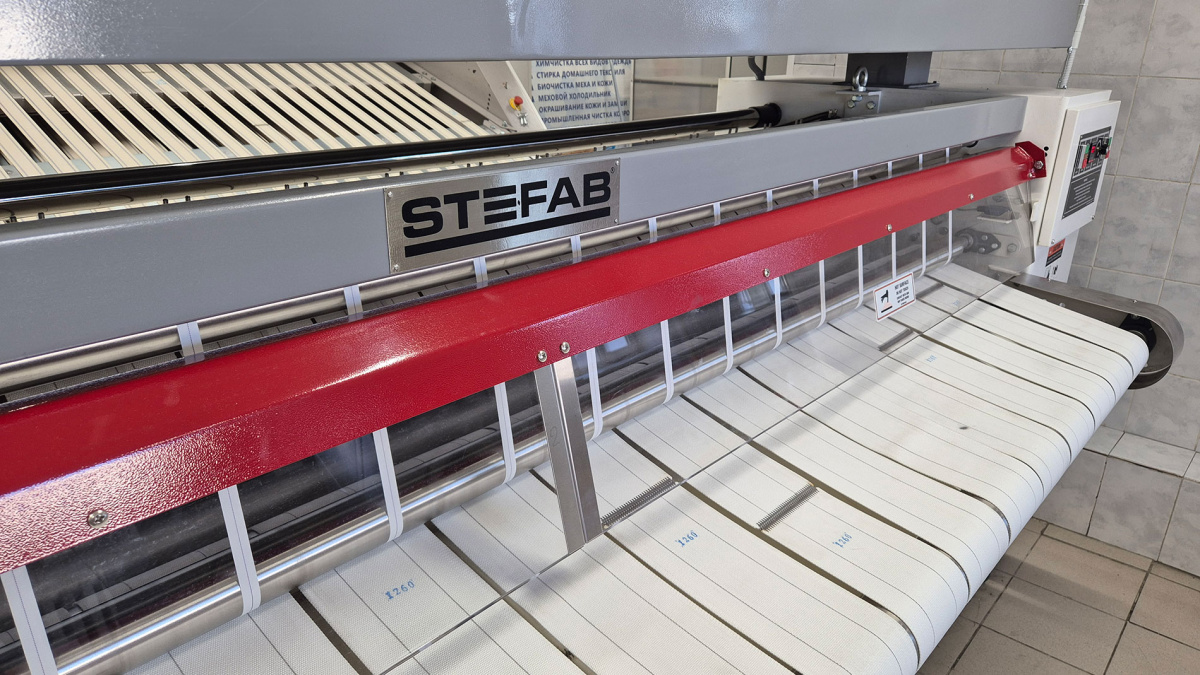
Earlier, we talked about the general principles of laundry design, the choice of washing machines and drying drums. Thus, moving along the technological chain, we get to the ironing department of the laundry. And the most important equipment here is ironing machines for direct linen - bed linen and restaurant linen. Exactly one year ago, in magazine No. 4(6), we already covered the topic of ironing machines for laundries quite fully. Article here. Let's add some nuances to this topic. Dmitry Kolotkov, manager of industrial laundries and product manager of STEFAB at TEXKEPRO, tells the story.
REPETITION IS THE MOTHER OF LEARNING!
Let's go through the main points of last year's article.:
- There are two fundamentally different types of machines: ironing rollers and calenders. Ironing rollers have much more advantages than calenders, but they are more expensive.;
- Ironing machines are the most expensive, smallest, and most bulky laundry equipment. Therefore, his balanced choice is the most important when designing the entire facility.;
- Ironing straight laundry is, unlike washing and drying in drying drums, always a manual operation that requires highly qualified operators. The ergonomics of their work must be addressed both when working with a wall-mounted machine and for a walk-through.
FEATURES OF IRONING RINKS
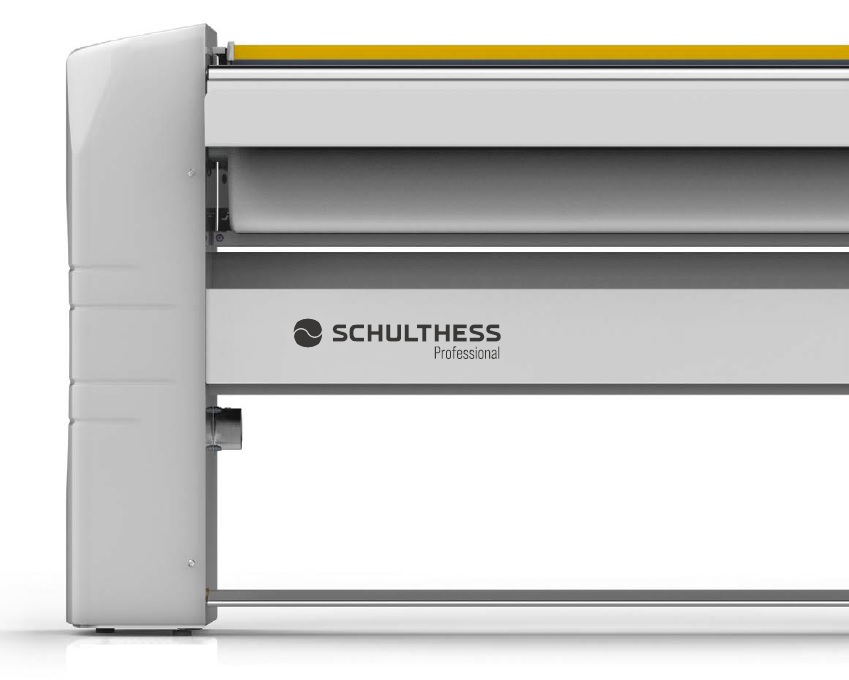
The range of calenders in the average range of performance and standard sizes (diameter and working width of the shaft) from many manufacturers is large. But ironing rollers, unlike calenders, continuously cover the entire imaginable range of machine sizes — from Miele crumbs with a working width of 80 cm to industrial multi-roll monsters Kannegiesser or Jensen. In any case, there are no calenders in a small range of shaft sizes (diameter up to 35-40 cm, working width up to 200 cm).
If we consider small ironing rollers, it should be understood that their ironing surface (muld) has a small angle of coverage of the machine shaft. These rollers cannot iron laundry with a residual moisture content of more than 25-30%. The muld itself can be made of both steel and aluminum.
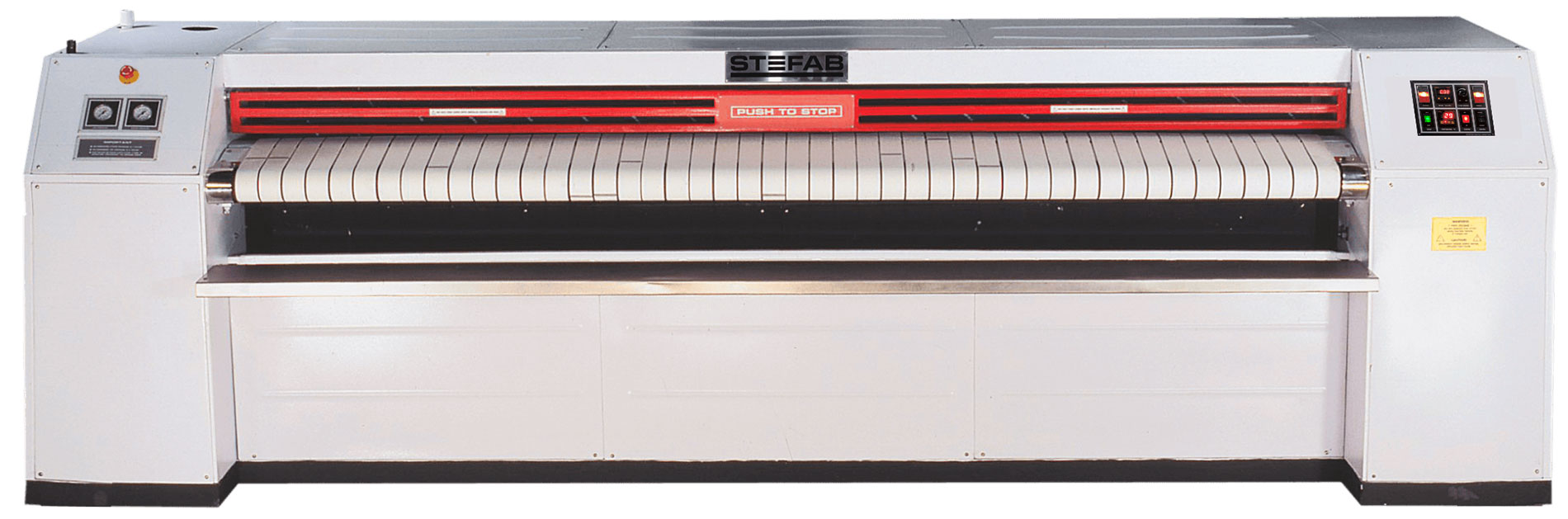
The latter difference is very important, since aluminum has 3 times greater thermal conductivity and 2 times greater heat capacity compared to iron (steel). Without going deeper into physics, it can be stated that the aluminum ironing surface, in principle (all other things being equal) reacts faster to changes in the supply of laundry and "holds" the set surface temperature better.
This is exactly the uncompromising design of the MSI 25/100, MSI 30/140, MSI 30/160 and MSI 30/200 ironing rollers with shaft sizes from 1 to 2 meters. But the flip side of the perfection of the machines, as always, is their price.…
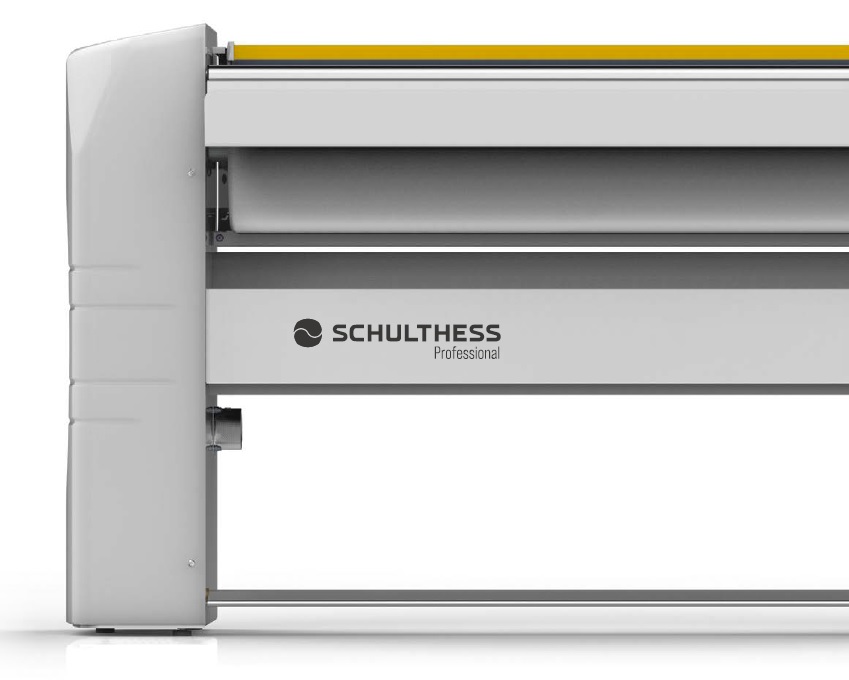
What else is important to pay attention to? First of all, it is the type of elastic layer of the ironing shaft. The base contains steel wool. With it, the machine is, of course, more affordable, but on the other hand, its rapid degradation, reduced productivity and quality of ironing are also provided to you. Any metal spring slats and/or springs will be much more interesting. The external coating of the shaft is also very important. High-temperature materials (Nomex, Aramid and other brands) will be much more durable.
Steam heating and, moreover, gas heating is not found in small skating rinks — only electric heating. Heating elements (heating elements) they have mulches directly fixed on the reverse side and are well insulated from the external environment. Of course, there is no question of any oil bath or coolant circulation in the mold. This is the prerogative of larger machines (and not all manufacturers), in which the coverage of the ironing shaft reaches an angle of 180 degrees.
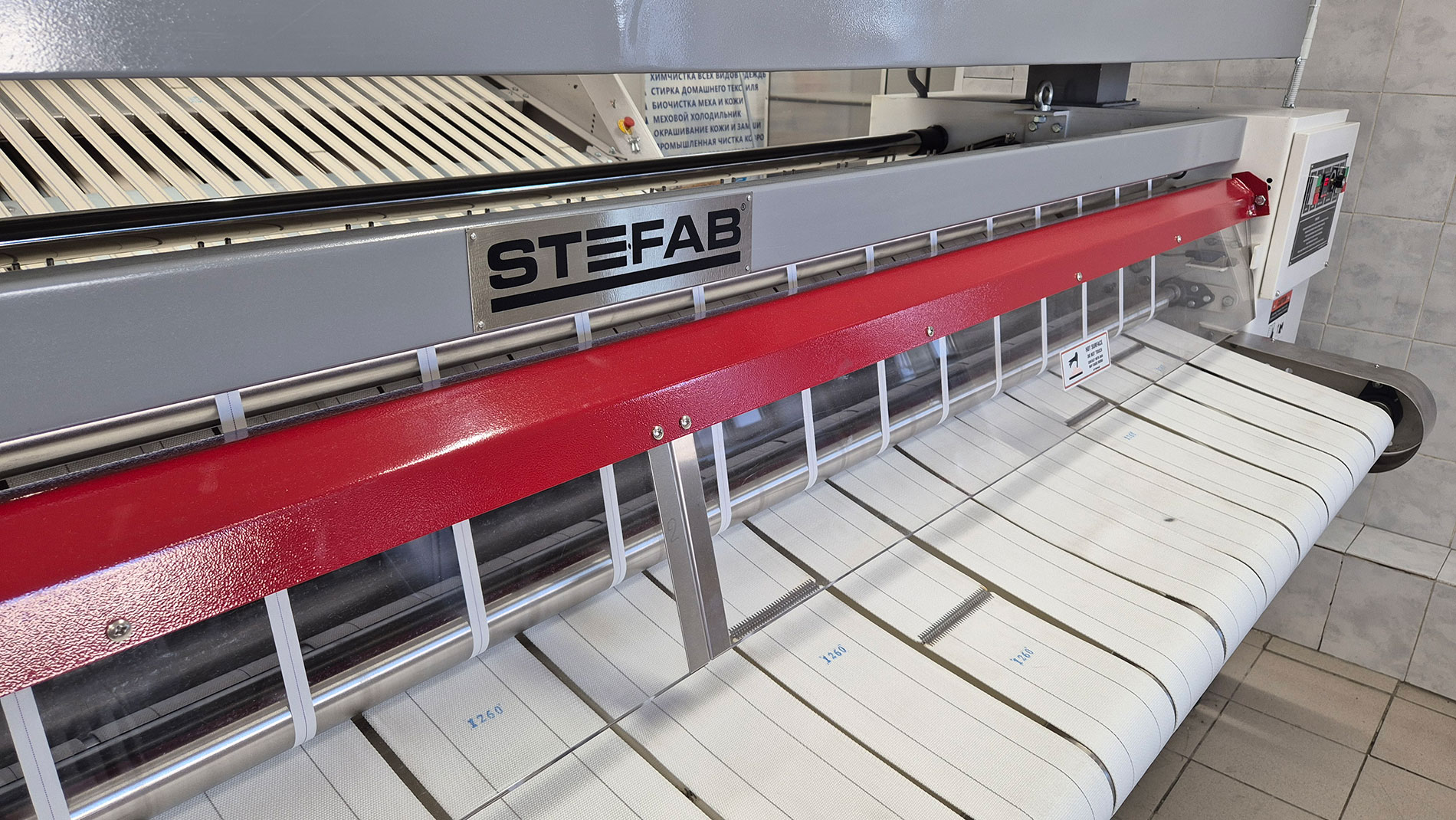
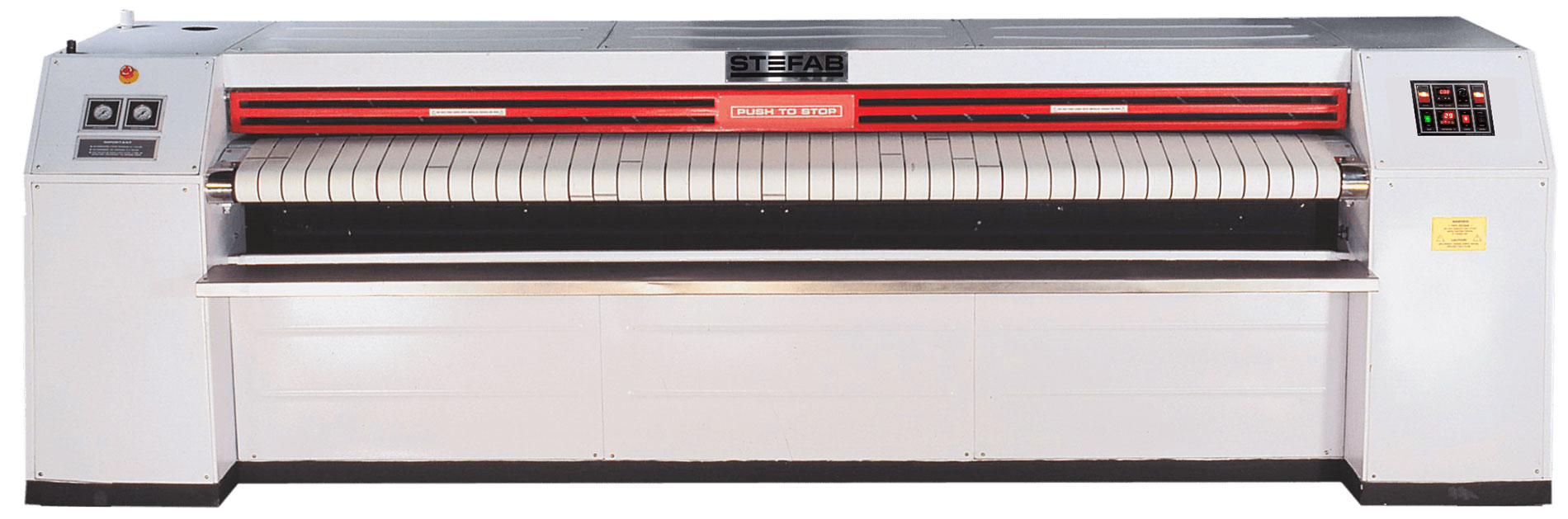
For example, the Indian STEFAB even has a relatively small ironing roller FRE 38-200 (the diameter and working width of the shaft are clear from the model name) has a massive muld with an oil bath in which the heating elements are immersed. The oil significantly increases the heat capacity of the mulch and thereby ensures high productivity and quality of ironing. The larger STEFAB models (FRE 53-300 and FE 83-330) also have their own pump, which circulates thermal oil, which further improves the consumer properties of the machine.
It is also necessary to dispel the myth that all ironing rollers cannot iron clothes immediately after high-speed washing machines (with a residual humidity of 50%). On the contrary, all rollers with a shaft diameter of 40 cm or more do just that successfully.
FEATURES OF CALENDERS
If we consider the design of a mass class of calenders with a shaft with a diameter of 40 to 80 cm, it becomes clear that the implementation of steam or gas heating is a fairly simple technical task. In the case of steam, steam is supplied through the hollow half-axis on one side into the shaft, and condensate is discharged on the other. In gas-heated machines, a linear gas burner is built into the shaft, gas and air necessary for combustion are supplied to it, and combustion products are removed.Gorenje Gorenje is a natural gas burner. But the design of the electric heater, which, on a cursory examination, does not seem to be worth attention at all, on the contrary, raises questions.
The fact is that most manufacturers of electric-heated calenders make its ironing shaft in the form of a thin hollow cylinder rotating on support rollers. A FIXED block of heaters is inserted inside it. That is, there is no direct thermal contact between the heating elements and the ironing shaft at all! And above we said that the difference in the thermal conductivity of two metals (aluminum and iron) is of great importance for the quality of the ironing machine. There is also an air gap between the heating elements and the ironing shaft (in fact, a heat insulator), the thermal conductivity of which cannot be compared with the thermal conductivity of metal! Let's add here the small heat capacity of the thinnest steel cylinder of the shaft. Summarizing the above, we see a huge difference between ice rinks and classic European calenders.
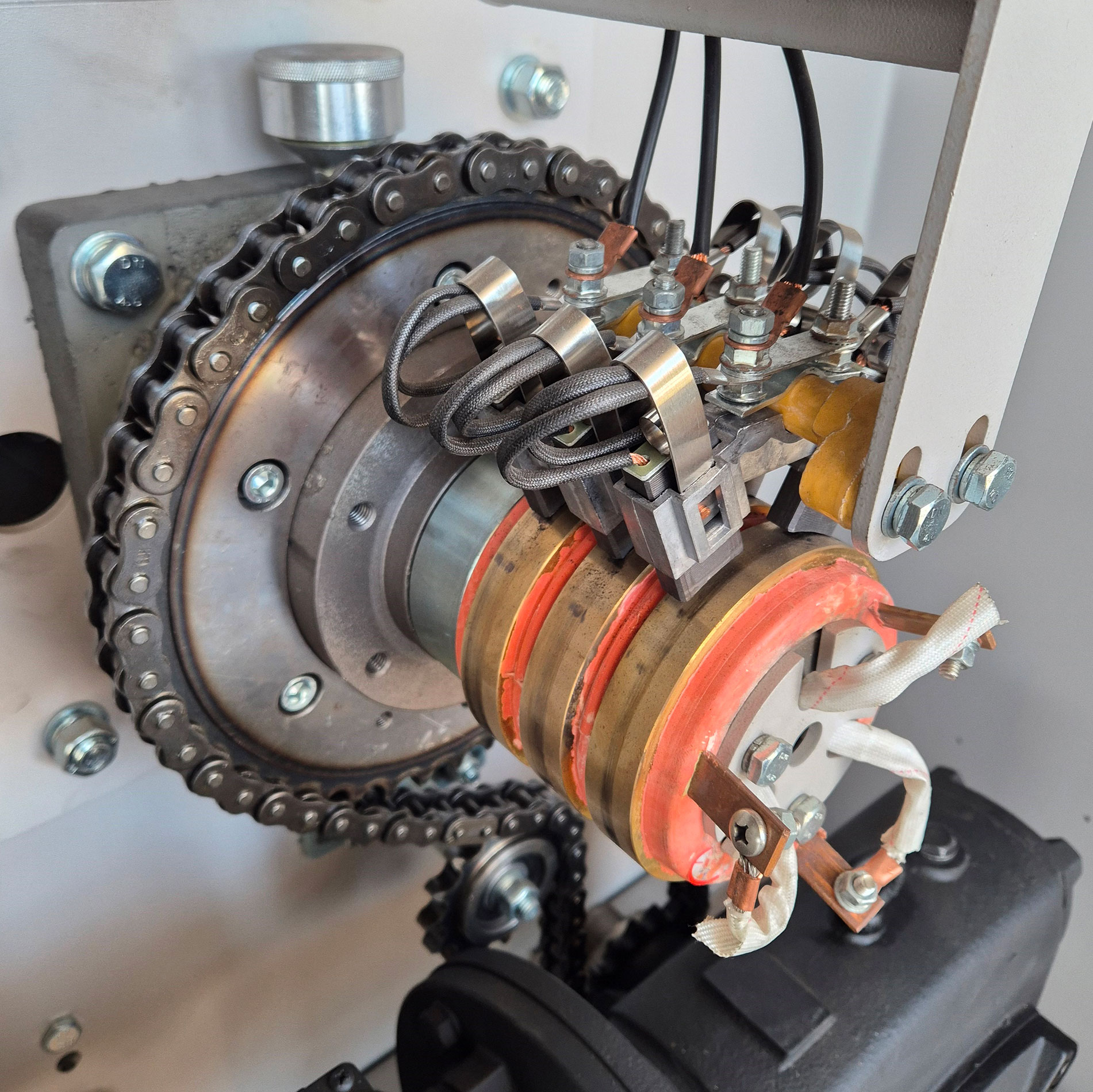
To offset the above disadvantages of the calenders, the designers of STEFAB made the heating elements part of the design of the ironing shaft, directly fixing them on its inner surface. This ensures direct metal-to-metal heat transfer (which is much better than metal-to-air-to-metal) and significantly increases the heat capacity of the ironing shaft due to the mass of the heating elements themselves. This is how all STEFAB electric-heated calenders are arranged (wall-mounted RLE 80-300, pass-through RE 80-300 and its multi-roll variants).
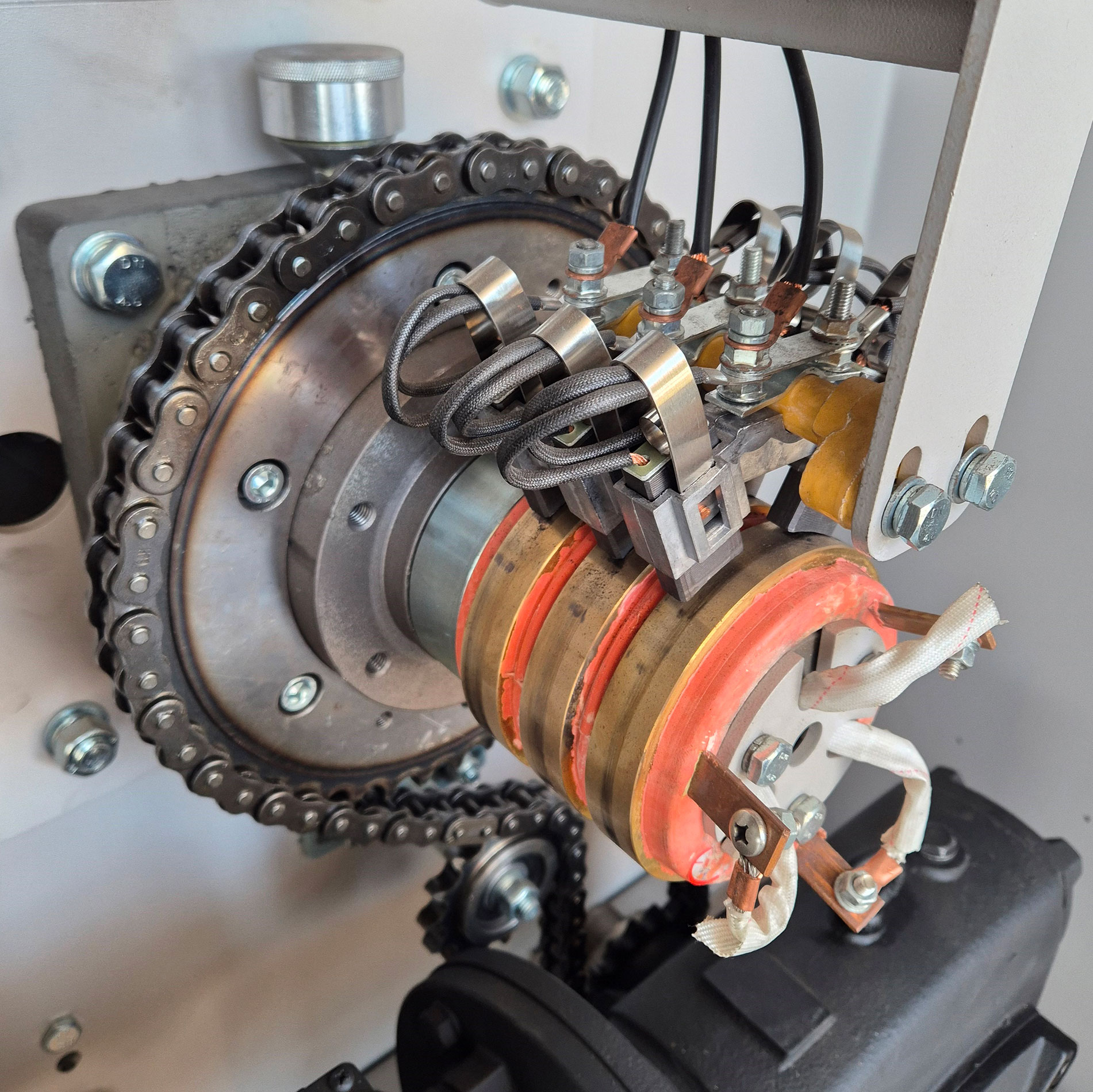
The question may arise, but how then can electricity be supplied to the heating elements of the calender, if they are continuously rotating? This is done using classic nodes, as in the subway or trolleybus. The only difference is that due to the extremely low rotational speed of the ironing shaft, these units (on one and the other shaft half-axes) are extremely reliable and durable.
CHARACTERISTICS OF IRONING MACHINES
Another aspect of the choice of ironing machines that I would like to focus on only briefly is their technical characteristics. Earlier, we touched on the general principle of selecting laundry equipment: we count laundry exactly according to the technical specifications, dry more (with a margin), and iron even more with a margin of productivity. Once again, ironing is a manual operation, and its performance will strongly depend on the qualifications of the staff, the intensity of work, and the actual size of the laundry being processed. In any case, the actual performance of the machine may not be more than half of the technical capacity stated by the manufacturer. In real life, it is impossible to imagine that an endless belt of laundry with a width equal to the working width of the ironing shaft is constantly being refilled into the ironing machine. There will always be gaps in the laundry flow and a mismatch between the width of the laundry and the size of the shaft. All this can be summed up as a decreasing utilization factor of the ironing surface area.
By the way, it makes no sense to talk about such a passport characteristic as machine performance unless the standard is specified at which this performance was determined (type of laundry, its density, residual moisture before ironing, percentage of utilization of the machine area). The characteristics measured according to DIN standard cannot be directly compared with the characteristics measured according to ISO! And other characteristics, for example, such a seemingly simple characteristic as the heating element capacity of ironing machines, says little. Let's explain. If the heating element capacity of a washing machine directly tells us how fast it heats the water, then the heating elements of dryers and especially ironing machines rarely work at full capacity — heating elements or groups of heating elements are constantly switched on and off. For example, it is clear that, all other things being equal, a machine with a 20 kW heating element that works only 50% of the time will produce "on-the-mountain" the same amount of laundry as a 10 kW machine, but with the heating elements constantly on.
That is why some manufacturers have simply stopped giving this characteristic, and some shamelessly report "fake" values. To evaluate the performance of machines, consumers have to focus primarily on the diameter of the ironing shaft, the working width they need, the features described above, and, to a lesser extent, other digital parameters.
In more detail and in detail, the nuances of choosing ironing machines, as well as any other equipment for dry cleaning and laundry, you can always discuss with our experts in the world of the right TEXKEPRO solutions.
Dmitry KOLOTKOV,
TEXKEPRO Company
bodys.: +7 (985) 992-79-76,
www.texcare.ru
Gallery