


How to design a laundry room correctly. Part 3
In previous issues of the magazine, we touched on the general principles of organizing and designing laundries, as well as the principles of selecting washing machines — the basics of any laundries. It's time to leave the "wet" area and highlight the specifics of the application and choice of dryers.
Dmitry Kolotkov, manager of industrial laundries and product manager of STEFAB at TEXKEPRO, continues the story.
GENERAL PRINCIPLES
Let me remind you of the general approach to selecting the performance of a set of equipment — "wash exactly as needed, dry more than wash and iron more than dry." This is an axiom for me, but I'll explain it for the readers. The first nuance concerns drying. The fact is that only terry products are completely dried in dryers and modern high—quality workwear is almost dry. The terry cloth is stacked immediately after drying and, according to technology, should "rest" on open shelves for some time. Workwear, slightly damp, is hung on hangers and also "reaches" a dry state without ironing. I don't even mention drying bulky products, such as down jackets after aqua—cleaning - it generally takes a lot of time.… Only bed linen and restaurant linen (which in most cases is at least half of the total weight of the processed laundry range) with a residual moisture content of 25 to 60% is used for ironing.
Thus, the function of drying direct laundry is distributed between drying drums and ironing machines. And given that dryers are the cheapest laundry equipment, it simply doesn't make sense to save a lot on their purchase and calculate their number exactly side by side. This means that "drying is more than washing." The excess capacity of the dryers will always allow you to dry straight laundry after wringing, thereby increasing, if necessary, the productivity of ironing machines, which, by the way, are the most expensive machines in the laundry.
GO DIRECT technology
GO DIRECT (move straight) is a brand name from Electrolux Professional. The point of the technology is that when using washing machines with final spin (G-factor more than 300), it is quite possible to send laundry immediately to ironing calenders, bypassing the stage of drying clothes in drying drums. Of course, the ironing machines themselves (and Electrolux had mainly calendered machines) must be powerful enough, with a shaft diameter of more than 400-500 millimeters.
The technology itself became available after the widespread replacement of unsprung washing machines with high-speed ones in the 90s of the last century. This made it possible to eliminate individual centrifuges and, consequently, reduce the separate heavy production operation of centrifugation. Indeed, loading 50 kg of laundry from the machine after washing could weigh 100 kg!
But in fact, the need to reduce expensive manual labor forced Europeans to apply the high-speed concept (of more expensive washing equipment). In fact, GO DIRECT is just a continuation of this trend. That is, in order to save on permanent salary costs, laundry owners simply purchased more advanced, high-performance and more expensive equipment.
The laundry owners know the exact answer, of course. But what I am sure of is that the level of Russian salaries does not yet encourage the purchase of the following set of equipment for the laundry of a small hotel with 50 rooms.:
- column of small machines for 6 kg;
- two washing machines of 30 kg each;
- one drying per 22 kg (for terry cloth);
- an expensive ironing roller from LACO (with a full-fledged laundry folderand a stacker).
And all this under the Miele or Schulthess brands just to operate the equipment for only 4 hours a day! At the same time, maids (and part-time laundresses) are paid only hourly wages. I saw it myself in Belgium.
Therefore, I would not recommend reducing the number of relatively cheap tumble dryers when completing the laundry, not to mention completely abandoning them and shifting the functions of drying clothes to the most expensive equipment — ironing machines. You don't need GO DIRECT in Russia.
So why, you may ask, is it necessary to "iron more than dry", since ironing is expensive? The explanation is simple. Unlike automatic washing and drying of laundry, ironing is always a manual operation. And the human factor strongly influences the actual performance of these machines. We must not discount the reality that ironing machines have never in their lives been able to iron an ideal infinitely long ribbon with a width exactly equal to the working width of the ironing shaft. During the day, there is always a "mix" of sheets, tablecloths, duvet covers, pillowcases and napkins of not only different sizes, but also of different densities, layers and even different materials. Thus, the actual percentage of the machine's ironing area usage ranges between 50 and 85%. That is, you can never select an ironing machine based on its technical (passport) performance. Therefore, "ironing is more than drying."
What else should you pay attention to when selecting drying and ironing equipment? It is important to understand that ironing and, in particular, tumble dryers are the main energy consumers in the laundry. According to the average estimate of European equipment manufacturers, if the cost of labor and maintenance is taken out of brackets, energy costs during the operation of a high—end hotel laundry for 10 years for washing machines will amount to approximately 30% of all costs (the rest is the cost of equipment, water and detergents). Whereas ironing machines will have energy costs of approximately 80% (+20% of the cost of equipment), and drying machines will have energy of even more than 90%!
Thus, the conclusion suggests itself that saving on the purchase of both the cheapest laundry machines (dryers) and the most expensive (ironing machines), choosing cheap and non-energy efficient machines, deprived of important options and functions for the sake of cheapness, is somehow unwise from the point of view of the business owner. So let's move on to a more detailed review of this equipment.
DRYING MACHINES
Drying machines, or, as they are most often called, drying drums, differ from washing machines of equal standard loading, primarily by doubling the volume of the drum. If the nominal load of a washing machine in kilograms of dry laundry is one tenth of the volume of the drum in liters, then for a drying drum there are 20 liters of its volume per 1 kg of dry laundry. In other words, a 100 kg drying drum has a drum volume of 2,000 liters. I would like to draw your attention to the fact that all calculations and all passport specifications are made using dry linen! The technological load factor is also taken into account. That is, if you took 40 kg of dry terry cloth (technological coefficient 0.8) and put them in a washing machine with a volume of 500 liters (50 kg at face value), then everything will be washed correctly and effectively.
Then the same load of already washed and wrung laundry will dry well and correctly in a 1000‑liter drying drum, which will also be considered 50 kilogram at face value.
The loads and volumes have been sorted out, and now let's move on to the design of the drying drums. Almost all of them have the same principle — the machine sucks in a significant amount of air from the laundry room, heats it and passes it through a rotating drum in which the laundry "floats" and dries in free fall. Inside the drum, the hot air releases energy to the wet underwear and then, being already wet and slightly cooled, leaves the drum. Next, it passes through a filter that collects the lint of the laundry, and is ejected by the built-in fan outside into the exhaust ventilation system of the laundry.
I will not dwell on the design of all the components of the machine, such as, for example, an air filter, an exhaust fan, a heater with a heat exchanger, etc. Let's focus on the basic one.
Air flow inside the drum
And what is very important is the air flow inside the car body. The fact is that initially there were two design options: axial (air moves along the axis of rotation of the drum) and radial (air crosses the volume of the drum along the radius, or rather along its diameter). The axial version has always been used by premium brands of equipment — Mile and Schultess. Even the ancient Electric Suites (before 2000) basically had just such a design. I think that the elders of the industry remember the wide range of Electrolux T600 and T1000 models with a large drum diameter.
The second option (with radial flow) has always been used by, let's say, cheaper brands. Why? The fact is that with axial flow, the manufacturer must make seals at the ends of the drum (both front and back) and structurally ensure long-term axial stability of the drum rotation, which determines the passage of all heated air inside the drum. This is the only way all the energy of the heated air can be used to the maximum, ensuring high productivity of the drying drum while simultaneously being economical. The heat exchangers built into the machine body, in which the spent but still hot air gave its energy to the fresh air entering the machine, as well as the built-in air recirculation systems, made it possible to further improve efficiency. But all this, of course, costs money.
But with radial flow, there are no seals, no recirculation, no heat exchanger. But the most important thing is that the hot air supplied from above should be "stuffed" inside the laundry drum. And air, like water and electricity, always follows the path of least resistance, and this path in such a design is always around the drum (past the laundry). That is, with a radial flow of air, part of it (and its energy) just literally flies down the pipe!
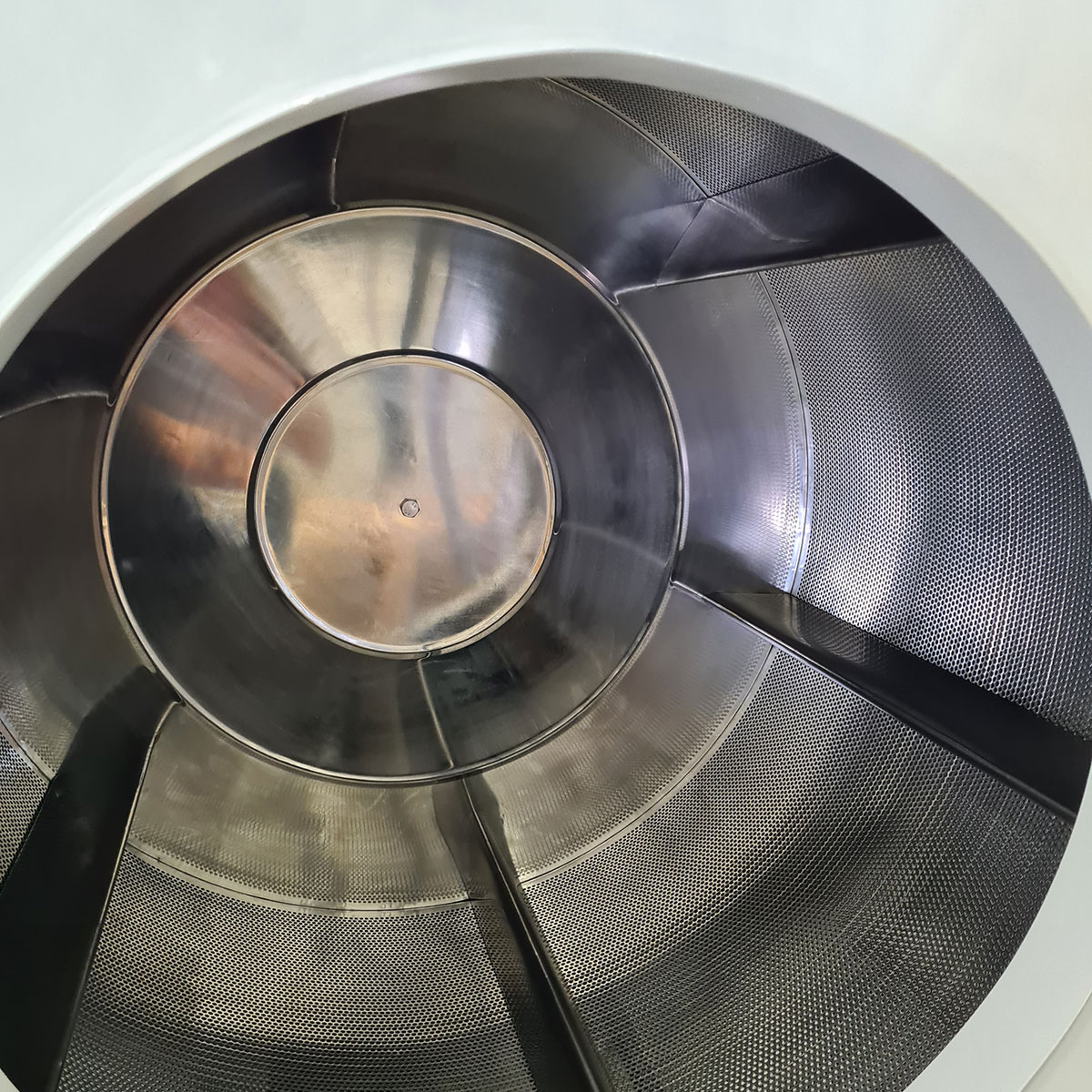
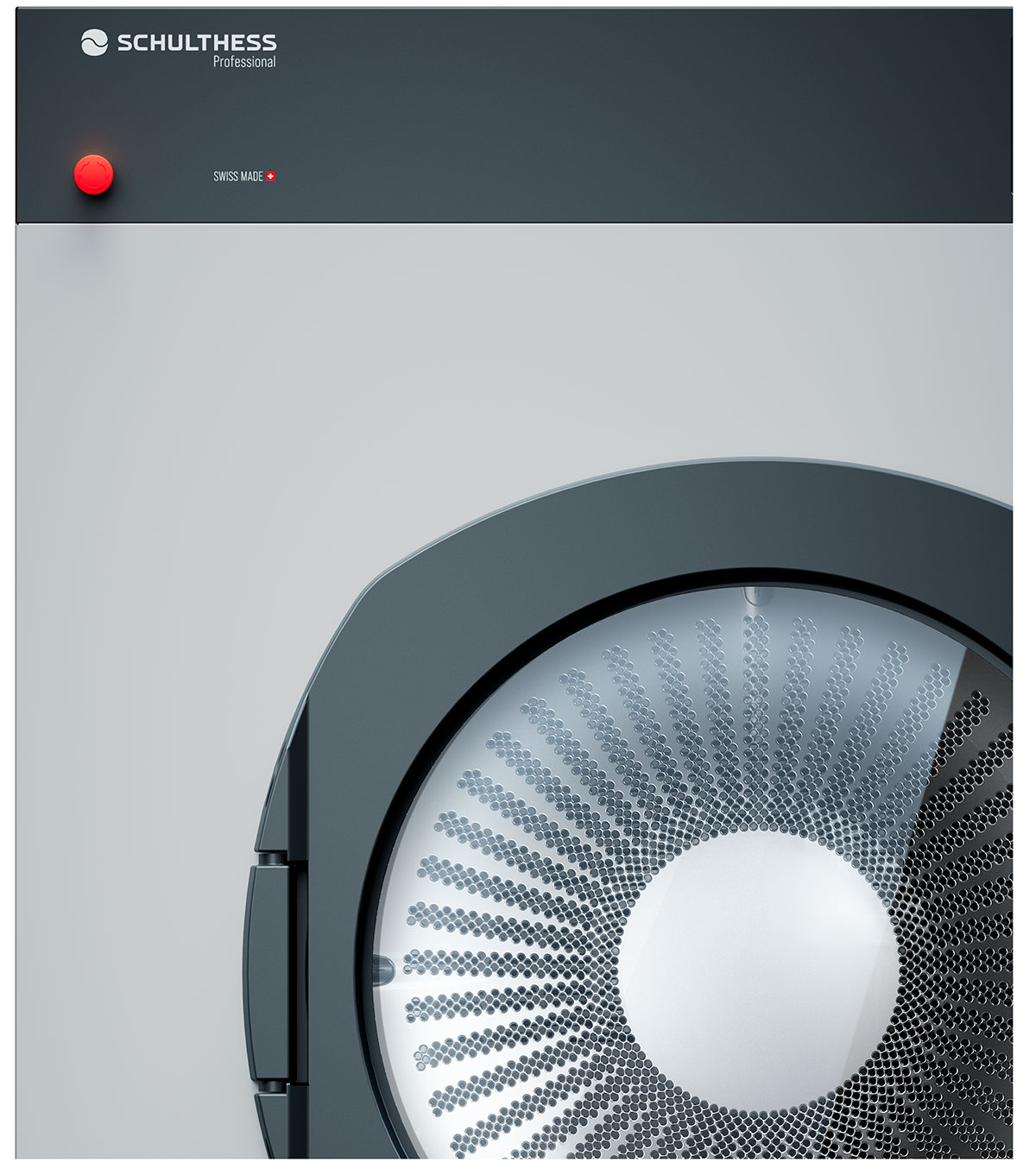
Since about 2000, due to the price pressure of cheaper equipment, designers of premium brands have been tasked with reducing the cost of production. A different task is set by marketers of cheap brands who always want to look better than they really are. One way or another, both of them solved the "problem" in a similar way — a combined radial‑axial airflow was invented. Since then, all marketers have been trumpeting his perfection with one voice. I'm not going to tell you what the real situation is. In the end, this is my personal professional opinion, which does not claim to be the ultimate truth. But if the drum of the expensive dryer offered to you looks different from the back wall of the drum in the attached photo of the modern Schulthess ProLine D650 dryer with a 33 kg load, you should think about how much of the premium axial air flow is left in it. In any case, it remains to be regretted that two complete drying cycles per hour is still an unattainable result for many manufacturers.
Suspension and drive design of the drying drum
There are also two main options here. The first is one small bearing on the short axis of rotation of the drum at the rear and at least two rubber support bearings on which the drum rests at the front. The advantages are the simplicity and cheapness of such a design, the disadvantages are the need for periodic replacement of bearing bearings, especially in cases where operators overload the machine.
The second option is like a washing machine. A powerful console with two bearings separated on a long axis and no support bearings at the front. In my opinion, since the rotational speeds and, consequently, the loads on these bearings are negligible compared to a washing machine, the service life of the bearings and the entire assembly tends to infinity. There are no disadvantages to this design, unless, of course, the designers were forced to make this node cheaper (and therefore weakened).
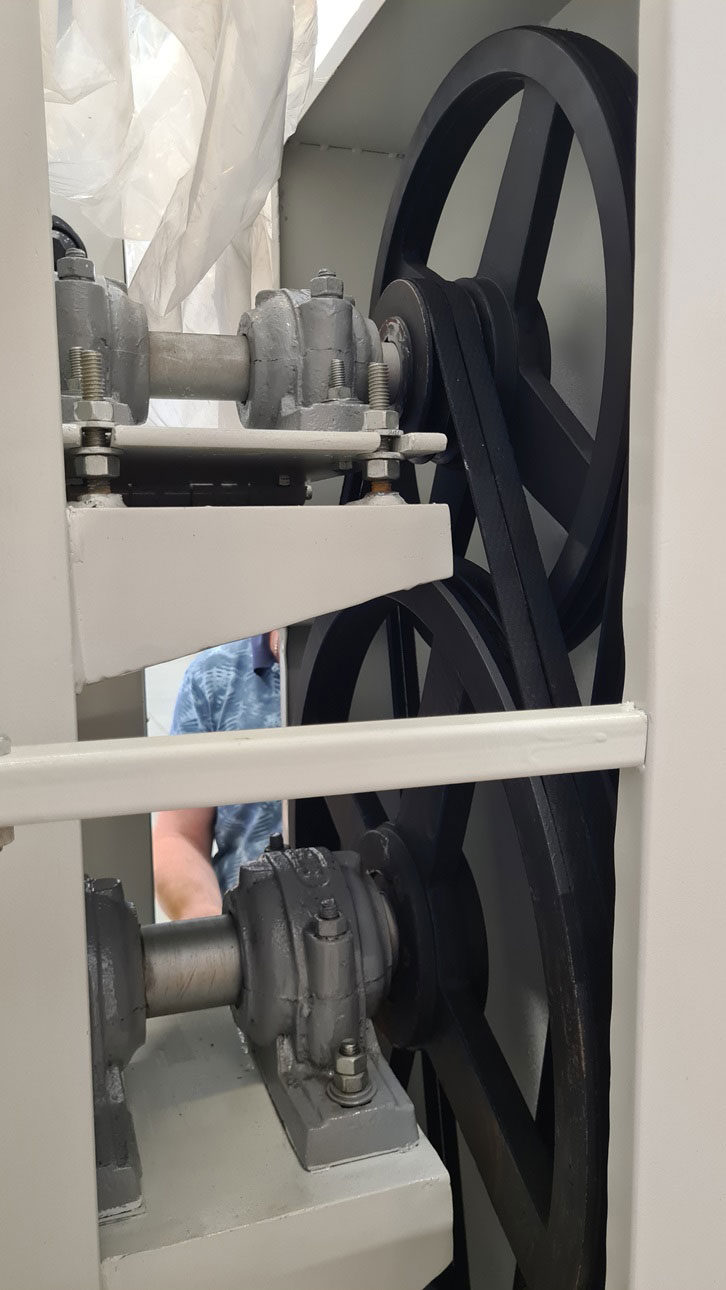
If we talk about the drum drive, then both the classic belt drive and the more modern and beautiful direct drive co‑exist by means of a geared motor controlled by an inverter (without the latter it will not work). In the first case, a two-stage step-down scheme is often used, when the electric motor turns the pulley of the first stage, and then the rotation through the second stage is transmitted to the shaft of the drum itself. The rotation is reversed simply by switching two phases on the electric motor, and the two-stage belt drive perfectly ensures smooth rotation of the entire structure. In this simple circuit, there is no expensive gear motor and there is no need for an electronic inverter. The price of this is a simple routine replacement of inexpensive drive belts.
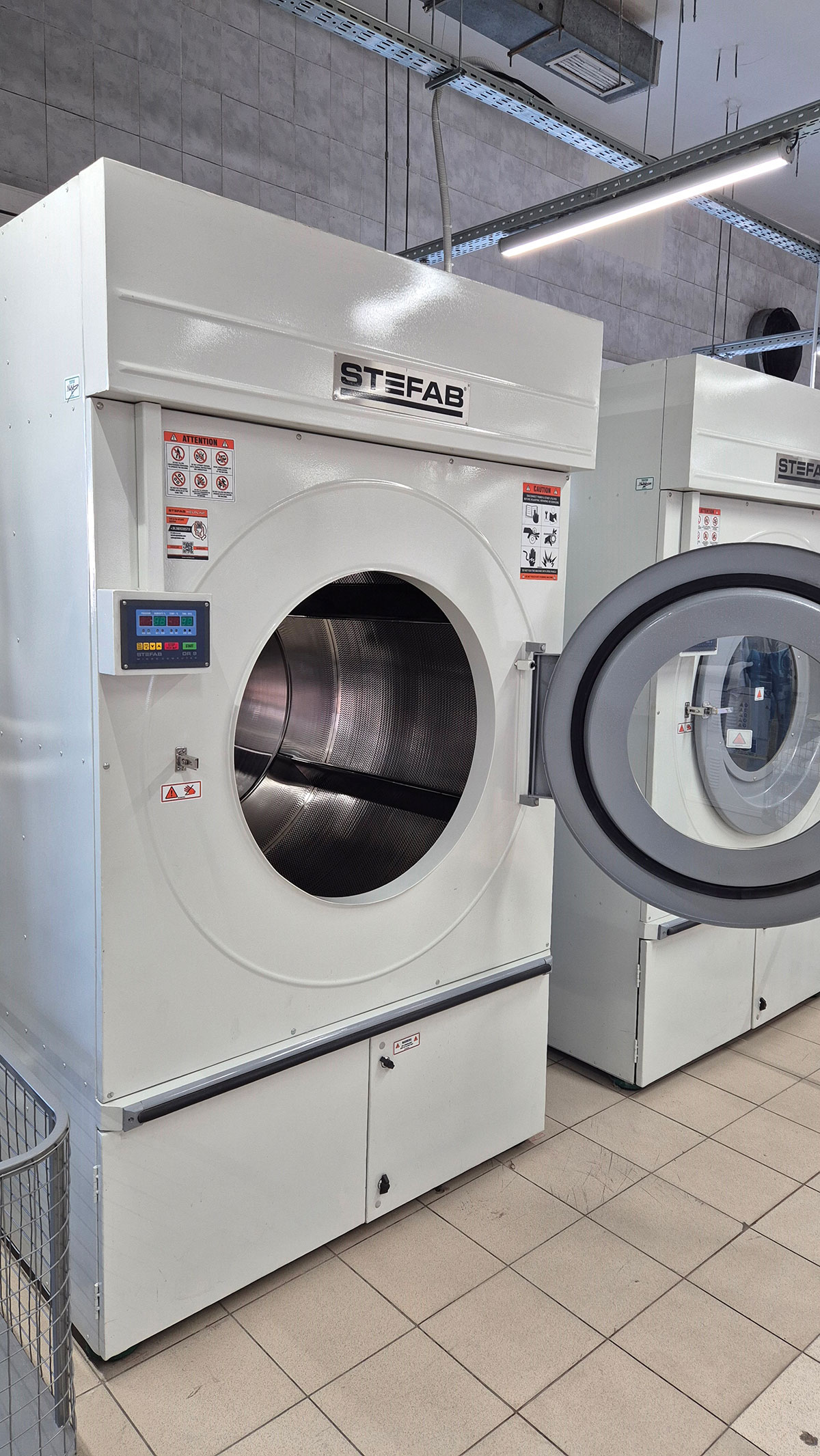
Which option is preferable is rather a matter of taste. The price for modernity and elegance is a non—zero risk of "falling" on the cost of a new gear motor and/or inverter. My choice is a classic drive, like the STEFAB DRE 60 drying drum (photo above). Yes, it looks a little scary in Indian, but it's as reliable as a T‑34 tank. Why make something complicated if the simple works well?
The processor of the machine
If a smart control processor in a modern washing machine has long been a mandatory and standard element for most manufacturers that turns a washing machine into a tool for the ideal implementation of any laundry technology, then the issue of using smart processors in dryers remains controversial. Unlike a washing machine, drying does not require precise control of the rotation of the drum, its acceleration, the choice of the type and levels of water to be poured, accurate and timely dosing of multicomponent detergents, constant self-diagnosis of all these parameters, etc.
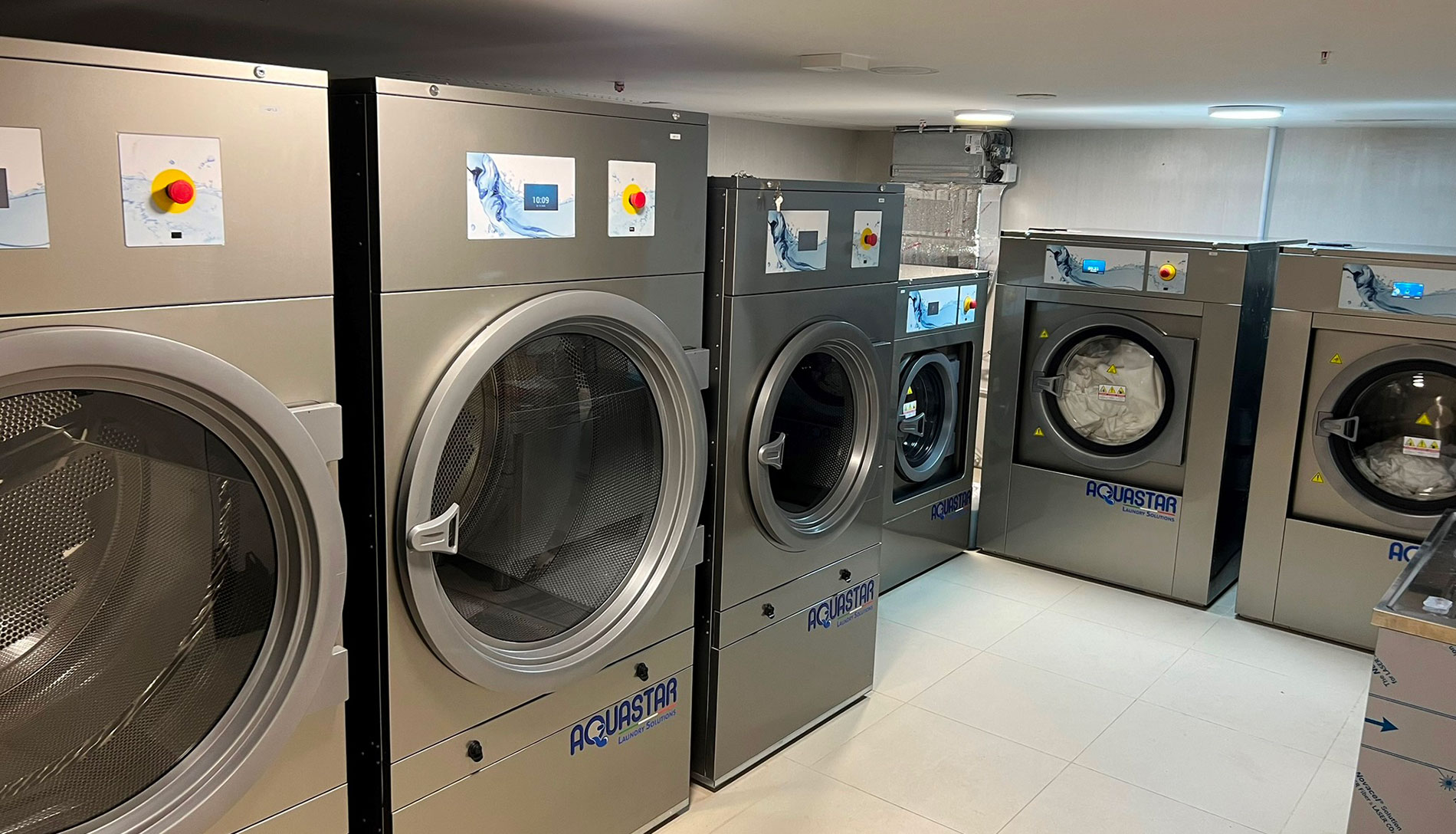
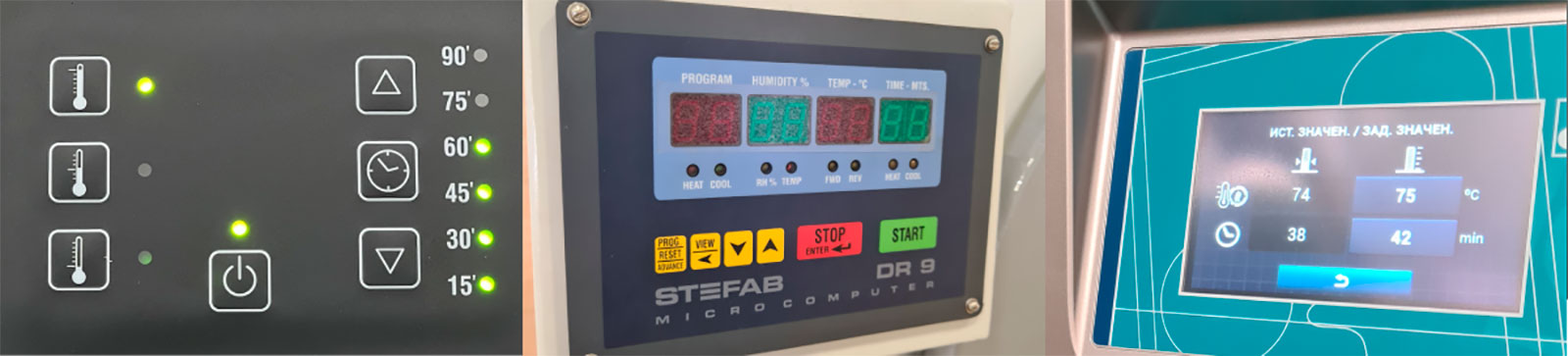
Of course, it is unlikely to find an electromechanical type of control in dryers now. After all, its cost in the modern world is already higher than simple electronics. But touchscreens and free programming look a bit superfluous. After all, free parameterization of drying time and temperature, as well as the level of residual humidity, is more than sufficient for the vast majority of technological tasks. Nevertheless, in modern dryers, you can find simple electronic controllers, simple but smart freely parameterizable push‑button processors (like STEPHAB's), and fashionably beautiful touchscreens, like AQUASTAR equipment. There is no limit to perfection. Unfortunately, of course, all this wealth with screens is not free and sometimes reacts very badly to our real power grid. In any case, all options have the right to life.
What options are needed in a good drying drum?
I am often asked this question. The answer is simple and consists of four points. This:
- A stainless steel drum is a mandatory attribute of the machines for the aquachist kit.
- The reverse of the drum rotation — without it, the laundry is wrapped in difficult-to-untangle knots, inefficiently dried and can be easily damaged by both the machine and the operators who have to deal with it all.
- Control of residual humidity. Required for aquachist. It allows you to fine—tune the technology for high-quality and efficient subsequent ironing of straight linen, proper drying of the shaped assortment, and also, importantly, eliminates energy overruns (and we remember that drying is the most voracious type of equipment?)
- The cool‑down function is to cool the laundry at the final stage of drying.
If these four items are in the car you are offered, then this is definitely a noteworthy unit.
DRYING WITH HEAT PUMP
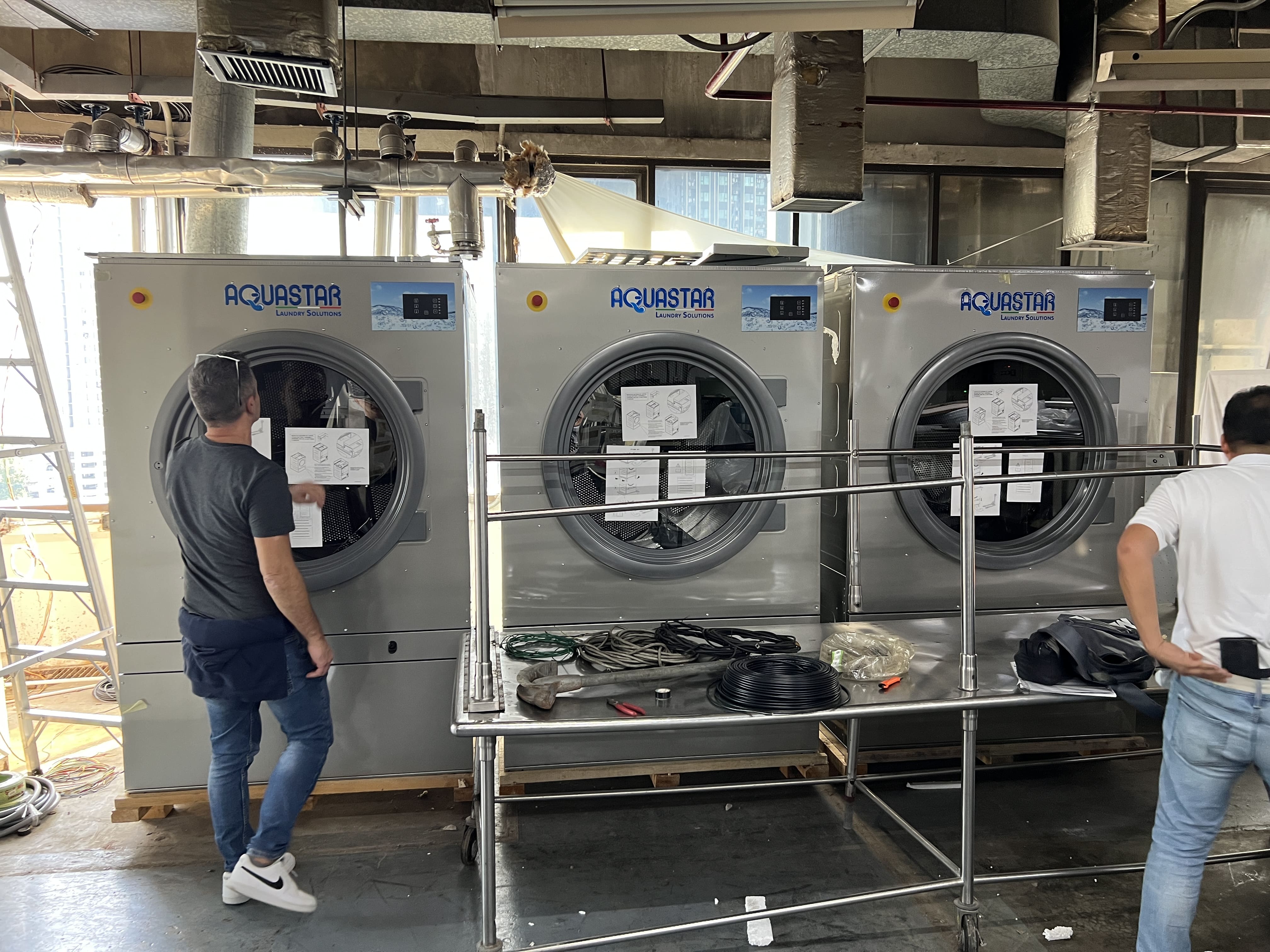
They stand apart, and I haven't seen them here in Russia, but it's useful to know about them. Dryers with a heat pump are, simply put, a symbiosis of a conventional drying drum with an air conditioner operating in dehumidification mode. An example of such a machine is the AQUASTAR S330HP TC2 drying drum (nominal load 16.5 kg). In fact, it is a closed drying system, which has record low energy consumption and a simple installation without supply and exhaust ventilation and water supply. The machine has an installation capacity of only about 4 kW. Compare with the similarly loaded classic AQUASTAR S330EL TC2 models with an installation capacity of 19 kW or with the STEFAB DRE 15 with a slightly more modest 15 kW. The difference is obvious and huge.
Similar AQUASTAR models are available with loads of 10.5, 13.5, 16.5 and 22 kg, as well as small professional machines with loads of 8 and 10 kg. To be fair, I must say that they are significantly more expensive and still inferior in performance to their conventional counterparts with air extraction ‑ there is no miracle here. But such machines are indispensable when there is little electrical power in the laundry room and / or when it is impossible for some reason to organize the inflow and removal of a large amount of air. And do not forget that over the years it will pay off with energy savings.
Type of Dryer heating
I left the discussion of the type of dryer heating for last, since this issue is also significant for ironing machines. In general, if we talk about the variety of heating types in dryers, then it should be said right away that not all manufacturers support its possible diversity in their production program. And there are really a lot of options. For example, the Indian STEFAB produces models with electric heating (DRE), steam heating (DRS), heating with an external coolant (thermal oil, DRT), gas heating (two different types — direct heating DRL and indirect DRG) and diesel heating (DRD). There are only six different heating options for the same machine!
Electric powered machines are most common, especially in small laundries. They are distinguished by the convenience of connecting to communications — only an electric cable and exhaust ventilation — and minimal maintenance. On the other hand, they are also the most uneconomical — that is, their operating costs are maximum. And if steam-heated machines (or thermal oil) are leaders in productivity, then gas-fired machines, occupying the second place of honor in terms of productivity, are the undisputed record holders in terms of efficiency. Therefore, when the topic of selecting premises for a new laundry is discussed with potential clients, one of the main issues is the availability of necessary communications and, above all, gas. If you have gas, then you are provided with the lowest possible cost of laundry processing.
On the other hand, GAZ is an additional regulatory body with all the ensuing consequences. But I want to draw your attention to another aspect of the choice of gas equipment. This is actually a type of gas heating — direct or indirect. Direct heating machines are inexpensive, but you should understand that the drying of laundry actually takes place in the chimney of a gas furnace. This means that such phenomena as soot on the laundry with incomplete combustion of gas, an unpleasant smell of laundry due to combustion products (for example, the same linen lint or other impurities) and, as the most dangerous, a fire of laundry and even a fire in the laundry room are quite possible.Gorenje
With the indirect type of gas heating, gorenje is produced in stationary conditions of the combustion chamber, and the energy is transferred to the supply air in a completely safe way through a heat exchanger. That is, such a drying drum is no more dangerous than any gas column or boiler, of which millions are installed in apartments, dachas and industrial enterprises in our country.
Perhaps that's all I wanted to tell you about dryers. We will continue to talk about the features of ironing equipment in the next issue of the magazine. In the meantime, an impatient reader can, if necessary, ask our specialists about any washing, water cleaning, stain removal and dry cleaning issues. You will always get a competent answer from the TEXKEPRO world of correct solutions.
Dmitry KOLOTKOV,
TEXKEPRO Company
bodys.: +7 (985) 992-79-76,
www.texcare.ru
Documents
