- Main
- About the company
- News
- Company News
We clean silk without stripping!
17/09/2018
The summer season is over, and the hot days are ending with it. It's time to take care of summer clothes and prepare them for the next season.
Therefore, the most reasonable customers are already ready to take their summer clothes to the cleaners, whose task is to carry out high-quality processing and return fresh, bright things to the customer, as a joyful reminder of the past summer and a sign of readiness for the next one.
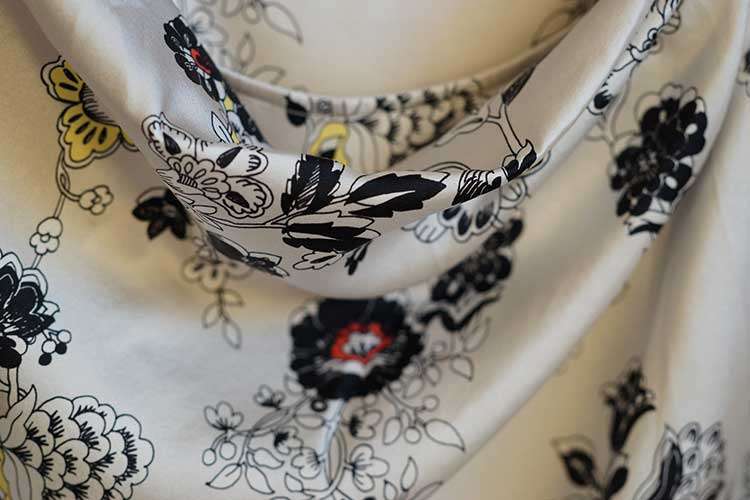
When we talk about summer clothes, we usually mean silk fabrics, on which, unfortunately, "water-soluble" stains appear so easily and naturally, requiring a special approach, as in the case of sweat stains.
We are happy to share our knowledge, experience and recommendations on removing sweat stains from silk products.
They usually have a yellowish color, are located in the armpits and on the back, and have a characteristic odor.
Sweat mainly consists of water, and also contains chloride salts, amino acids and nitrogenous substances. These substances oxidize over time or under the influence of heat during drying and ironing, which leads to a change in the color of the stain from transparent to yellow. Also, over time, sweat stains begin to act on the fiber as an alkali. Silk is extremely sensitive to the effects of alkalis and easily discolors upon contact with them. Chloride salts also weaken silk fibers, making them resistant to mechanical stress.
This is another important reason to keep such items clean for winter storage - tell your customers about it on occasion!
Silk fabrics have unique properties, but they are demanding on processing technology and do not like increased mechanical and chemical effects, so we do not recommend manual stripping and stain removal, which can cause damage to the product and losses.
For effective removal of impurities in the safest mode, we recommend Kroisler preparations, which in most cases completely dispense with local stripping and stain removal.
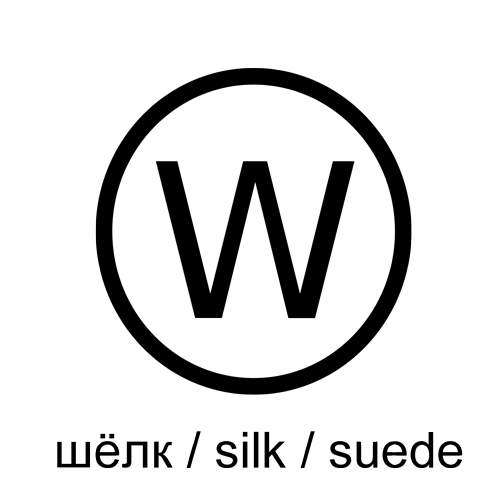
When choosing a cleaning technology, we recommend following the instructions on the product label, and in case of its absence, notify the customer about this and choose the most appropriate process.
If the product is subject only to dry cleaning, then removing sweat stains and unpleasant odors in a dry cleaning machine can be quite problematic, precisely because of the water base of these contaminants, despite the fact that all dry cleaning solvents are "degreasing".
With all the variety of solvents available on the market, traditional perchlorate, and the many "most alternative of all alternative" solvents that replace each other every year, cleaning such contaminants in a solvent is the most effective. SOLVONC4, which is a polar compound in its structure, and, given that "like dissolves in like," SOLVONC4, in our experience, removes water-soluble contaminants better than others.
For most products, a standard cleaning program in perchlorate or other solvent will be sufficient, but for old stains, a 2-step program will be required. It is added to the first bath Presorb Clip in a dosage of 1.5 — 3 ml / l of working solution. So for a machine with a load of 15 kg, the dosage will be 68-135 ml per load. Clip Presorb actively helps to remove water-soluble stains and pigmented impurities, fights unpleasant odors of any nature and is suitable for use in both alternative solvents and perchlorate, improving their washing ability.
A Clip series cleaning enhancer is added to the second bath, which not only gives a pleasant neck to the fibers, but also helps to remove dirt better, has powerful antistatic properties (a separate antistatic is simply NOT NEEDED!!!) It has antiseptic properties and helps to keep the car in good condition, protecting it from bacteriological contamination, which causes an unpleasant musty smell.
But the most effective cleaning will be in an aquatic environment, that is aquachistka in LANADOL process. Due to the "right" chemistry, such as Lanadol series preparations, the aquachist is one of the safest cleaning processes.
A specially developed Lanadol Sensitive Silk program with the addition of Lanadol Avant to the first wash is suitable for silk.
Lanadol Avant is usually used as a stripping agent, but in our case it will work as a washing booster. Thanks to an effective complex of surfactants, a system for stabilizing dyes and protecting against resorption, Lanadol Avant helps to remove impurities and at the same time preserve the original fabric structure and color brightness. For the best effect, the dosage of Lanadol Avant will be 6-10 ml/kg of machine load. For example, a machine with a 15 kg load will require 180-300 ml per load.
If you have any questions about the cleaning process or the products used, we will be glad to hear them from you! Discover how much does the dry cleaning equipment cost? you can contact us by phone, as well as by writing to the technologist by e-mail. Besides, we are always glad to see you at our practical seminars!
Gallery